
Quick Answer
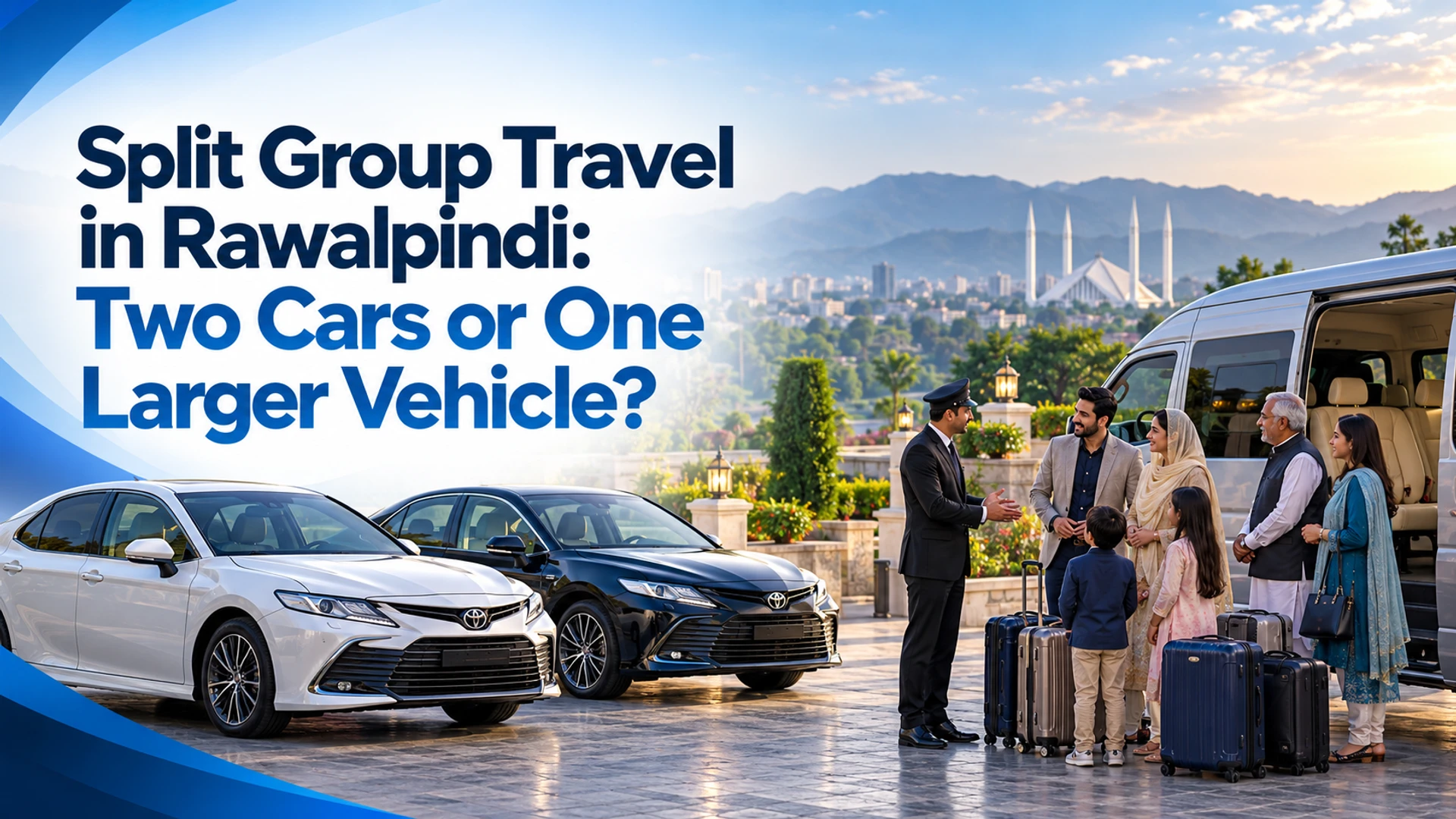
For split group travel in Rawalpindi, compare the group's destinations and communication needs before choosing two cars or one larger vehicle with driver. Two cars can support separate arrivals but require two clear passenger lists and pickup plans. One larger vehicle keeps the group together but still needs a workable approach and stopping arrangement. Confirm the actual vehicles, passenger places and luggage fit before booking.
Half the family wants to leave after lunch; the others plan another visit. Everyone fits into a proposed larger vehicle on paper, but they no longer share the same journey. A seating comparison cannot settle that problem because the real choice is whether the group needs to move together.
This guide considers coordination for ordinary city travel. Choose an arrangement the group can manage from first pickup to final drop-off, with actual access and booking terms confirmed.
Start with how many journeys the group actually needs
One group can contain two different itineraries. Write down who must arrive together, who may leave separately and whether the final destinations match. These details often reveal the better booking request before you compare vehicle categories.
If everyone shares one starting point, destination and departure decision, a larger vehicle may simplify coordination. If two households start in different places or return at different stages, two cars may be worth discussing. Neither arrangement is automatically suitable; the provider must confirm available vehicles and the practical scope.
Ask whether keeping everyone together matters more than separate return journeys. Agree that priority with the passengers before comparing vehicles.
The existing Hiace transport guide can help with broader questions about larger-vehicle bookings. The decision here concerns shared or divided movement, rather than a general description of a van's uses.
Compare approach and stopping space without guessing
A smaller vehicle is not proof that a particular street can be used. Ask the destination contact about the current approach, entrance and passenger stopping arrangement, then share that information with dispatch for the actual assigned vehicles.
Consider where passengers board, where doors open and how the vehicle leaves after the stop. A road may look wide enough in a photograph while the practical boarding space remains unclear. Two cars also need two arrivals, even if they do not arrive simultaneously.
For official traffic information, refer to Rawalpindi City Traffic Police. Current street restrictions, road conditions and parking permissions have not been established in this guide. Follow current signs and directions, and confirm the proposed approach near the date of travel.
Check the destination, not just the road leading to it
Ask the host which entrance the group should use and whether a larger vehicle can approach that entrance under the arrangements in force. If the host is unsure, mark access as unresolved. Do not convert “vehicles usually come here” into a confirmed plan for your booking.
If the approach is unsuitable, discuss another permitted meeting point or a different transport arrangement. Avoid solving the problem by assuming the group will walk an unspecified distance. Passengers' access preferences and belongings still matter, whichever vehicle structure you choose.
The coordination trade-offs at a glance
The useful comparison is between two operating plans, not between an abstract small car and large van. Use the table to identify which questions dispatch and the group need to settle.
| Decision factor | Two cars with drivers | One larger vehicle with driver |
|---|---|---|
| Different destinations | Can be requested as separate journeys | Requires an agreed stop sequence |
| Passenger communication | Needs a contact in each car | Can use one lead passenger |
| Departure decisions | Each party can request its own plan | Group needs a shared departure decision |
| Street approach | Must be checked for both vehicles | Must be checked for the assigned vehicle |
| Belongings | Need deliberate allocation between cars | Need confirmed shared storage space |
| Mid-trip changes | Must identify which booking is affected | May affect everyone on board |
| Commercial scope | Confirm each vehicle's separate terms | Confirm the full group journey scope |
One larger vehicle can reduce the number of moving parts only when the group actually shares a plan. Two cars can separate journeys only when passengers and dispatch know which party belongs to each booking.
If you choose two cars, make each one self-contained
Each car should have a passenger contact, confirmed destination and its own relevant belongings. Do not make the second driver depend on following the first vehicle through traffic. Matching destination instructions are more reliable than trying to maintain a visual convoy.
Assign passengers by their journey needs. People who need to arrive together should normally have a deliberate shared plan, while those leaving separately need their own confirmed return arrangement. Ask passengers which companions they need rather than splitting solely by household size.
Put essential belongings with their owners
A bag travelling in the other car becomes a coordination problem if the vehicles separate. Keep each passenger's necessary personal items and destination details with that passenger. Allocate shared bags deliberately and tell the relevant lead contact where they are.
Do not assume the combined boot space of two unspecified cars will accommodate every item. Give the provider the actual passenger and luggage information and request confirmation for the assigned vehicles. This is a loading and allocation question, not a claim about standard model capacities.
Avoid duplicate and conflicting requests
Choose one overall organiser, but give each car a practical passenger contact. If one party changes destination, its contact should identify the affected vehicle and tell the organiser. Do not send an unqualified “change our pickup” message when two separate collections exist.
Before departure, each contact should repeat their own destination and pickup process. If both cars are visiting the same place, give both the same confirmed entrance description. Arrival and waiting arrangements still need confirmation.
If you choose one larger vehicle, agree group decisions early
A shared vehicle needs a shared decision about readiness, stops and departure. Ask everyone to understand the final plan before the journey begins. One passenger's extra errand can otherwise become an unexpected stop for the entire group.
Check the actual passenger places and luggage arrangement with dispatch. A broad category name does not establish the usable configuration of the assigned vehicle. If a replacement is offered, confirm that the group and belongings still fit the agreed arrangement.
For the underlying category comparison, the published BR-V versus Hiace rental guide provides related reading. Use it as background rather than repeating a specification comparison when the unresolved issue is whether everyone wants the same itinerary.
Agree who can request a change on behalf of the group. That person should check with affected passengers, then seek dispatch's confirmation of the revised scope. A large vehicle reservation does not automatically include additional stops or an extended return window.
Compare quotations for the same requested work
Two cars and one larger vehicle can only be compared meaningfully when the requested journeys are clear. Give dispatch the starting points, destination sequence, passenger allocation and return needs for each option. Ask for the scope and exclusions to be stated for both proposals.
Do not compare a single direct journey in a larger vehicle with two cars expected to make separate errands and return collections. The second proposal includes different work. Ask which arrangement matches the group's real needs before drawing a price conclusion.
Clarify waiting, additional stops and any other variable elements through the actual quotation. This guide establishes no price, dispatch policy or availability. If the group wants flexibility, describe the possible change and ask what can be agreed rather than treating flexibility as unlimited.
When approaching Al Farooq's car rental service in Rawalpindi, request with-driver options for the specific group plan. A category being discussed is not confirmation that the requested vehicle or two-car combination is available on your date.
Example: one shared lunch, two different return plans
Imagine relatives travelling to lunch in Rawalpindi. One party plans to go home afterward, while another intends to visit a host at a different address. The lunch destination is shared, but the return journeys are not.
A two-car request could keep each party's bags and return contact together, subject to confirmed vehicles and terms. A larger-vehicle request would need an agreed sequence that works for everyone, or a separately arranged later journey. Neither answer follows from passenger numbers alone.
Before choosing, confirm the second host's entrance and access, ask both parties how much they value travelling together, and request comparable booking scopes. This gives the organiser a concrete decision instead of an assumption that either more seats or more vehicles automatically solves the day.
Pre-booking checklist for the organiser
- List who shares each destination and departure decision.
- Confirm access questions with the relevant hosts.
- Ask dispatch about the actual vehicle or vehicle combination.
- Allocate passengers and essential belongings deliberately.
- Name a passenger contact for each separate car.
- Confirm how additional stops or changes must be agreed.
- Compare quotations against the same stated journey requirements.
- Give each party a clear return pickup process.
Frequently Asked Questions
Not automatically. Access depends on the particular street, current restrictions and the assigned vehicles. Two cars also need practical boarding and stopping arrangements. Confirm the destination approach rather than assuming smaller vehicles can enter or wait wherever a larger vehicle cannot.
No. Each driver should have the confirmed destination and relevant booking instructions independently. Avoid making one party's journey depend on staying behind another vehicle. Coordinate through the named passenger contacts and dispatch rather than asking drivers to maintain a convoy through traffic.
No price conclusion can be made without quotations for the actual work. Different stops, waiting requests and return plans can change what is being compared. Request clearly defined proposals and choose the arrangement that fits the group rather than relying on a general rule.
You can request a change, but the provider must confirm availability and revised terms. Do not assume an existing booking guarantees a different combination later. Explain the passenger split, destinations and luggage allocation so dispatch can assess the complete replacement request.
Follow the separate return arrangement if one has been confirmed. With a shared vehicle, ask dispatch about a revised plan before assuming one party can leave independently. Discuss likely differences in departure preference before booking, when the structure is easier to choose.
Keep essential items with the passengers who need them, and assign shared bags to a named contact. Confirm fit for each actual vehicle rather than relying on combined theoretical space. Recheck the allocation if a party changes destination or a replacement car is assigned.
Final Thoughts
The right group arrangement follows the journey: shared destinations and decisions may favour one vehicle, while distinct return plans may justify discussing two. Access, luggage and communication still need confirmation in either case. Passenger numbers are only the beginning of the choice.
Send your passenger split, destination sequence and return needs to Al Farooq Rent a Car to discuss suitable with-driver options. Ask for confirmation of the actual vehicles and clearly defined booking scopes before deciding.