

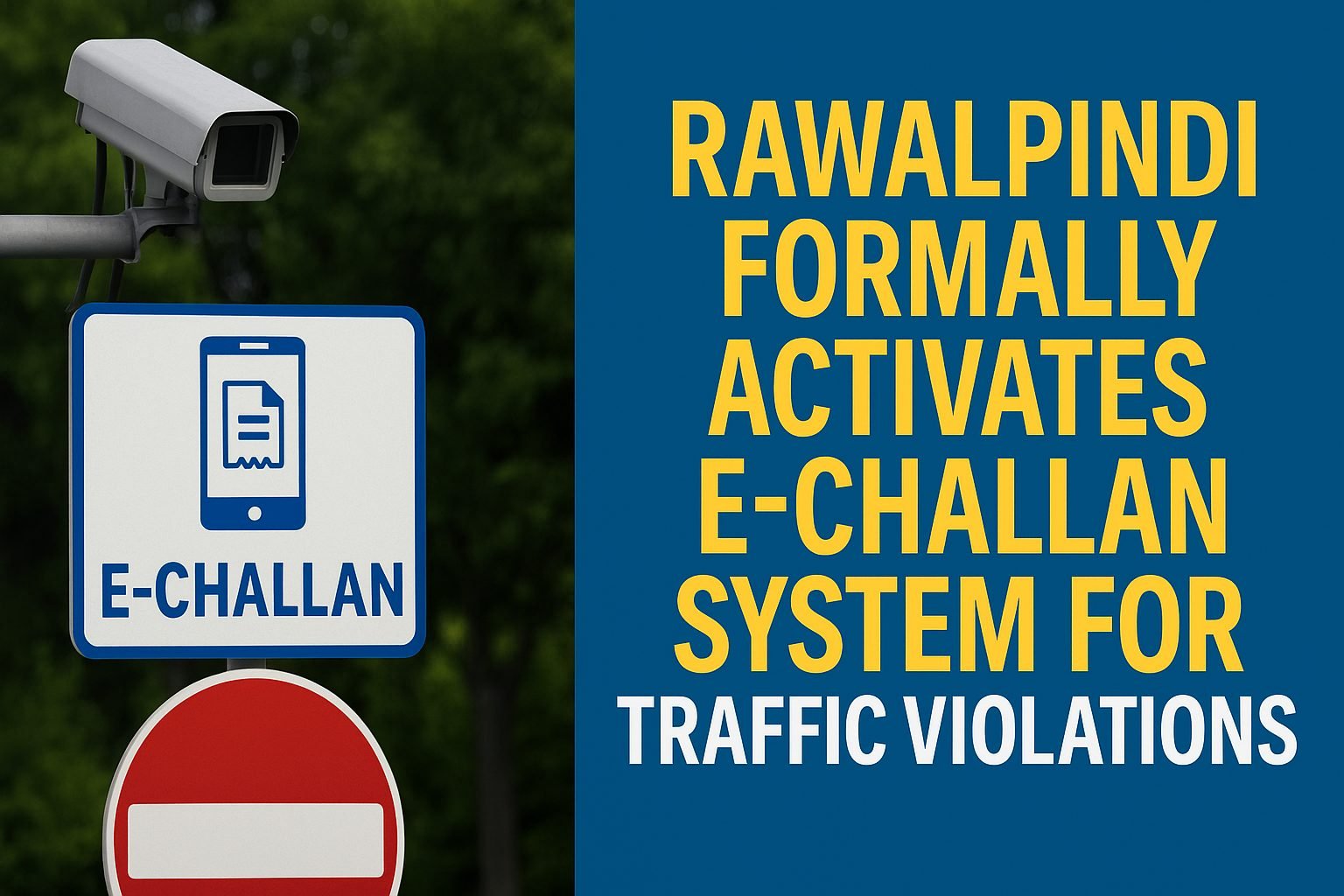
Rawalpindi has officially activated its automated e-challan traffic enforcement system, marking a significant shift in how traffic violations will be detected, recorded, and penalized across the city. The system went live on 22 November, according to the Senior Superintendent of Police (SSP) Safe City Rawalpindi, as reported by the national newspaper DAWN.
This step places Rawalpindi among the cities that have moved toward automated enforcement practices, with Karachi having implemented a similar system earlier. The newly operational mechanism is fully integrated with the Safe City Command and Control Centre, enabling real-time monitoring and automated fine issuance for multiple categories of violations.
High-Resolution Surveillance Across the City
The new system relies on an extensive surveillance network designed to capture traffic violations with accuracy and provide photographic proof to vehicle owners. According to the Safe City authorities:
- Over 2,000 cameras have been installed
- 359 locations across Rawalpindi are covered
- 15 additional cameras are deployed at major entry and exit points
The deployment includes high-resolution cameras capable of reading number plates, detecting movement patterns, and identifying unsafe behaviors on the road.
Once a violation is detected, an automated e-challan is generated, accompanied by:
- A time-stamped photograph
- A violation code
- A deadline for depositing the fine
This system not only identifies vehicles in violation but also supports the Safe City Centre’s ability to manage traffic flow, monitor congestion, and evaluate the performance of field traffic personnel.
Automated Fines for Common Violations
The e-challan system identifies multiple types of violations. With full automation in place, many high-risk behaviors are now instantly penalized. The system covers:
1. Helmet Violations
Motorcyclists riding without helmets will receive automatic e-challans.
2. Seatbelt Violations
Drivers detected without seatbelts—especially on major corridors—will be fined.
3. Lane Discipline Violations
Cameras equipped with lane-mark detection issue challans when vehicles drift into restricted lanes.
4. Use of Mobile Phones While Driving
Drivers caught holding or using mobile phones will receive challans without need for manual enforcement.
5. Signal Violations
Running a red light is detected instantly and recorded with photographic evidence.
6. Non-standard or Illegal Number Plates
Vehicles carrying plates that do not comply with Excise specifications will be penalized.
All violations result in challans being issued directly to the registered vehicle owner’s home address, creating a more transparent and traceable enforcement process.
Integrated Public Safety Monitoring
The e-challan rollout is part of a broader strategy to enhance Rawalpindi’s traffic safety and monitoring capabilities. The Safe City system does more than detect violations. It includes:
- Continuous monitoring of major roads and intersections
- Performance evaluation of traffic personnel
- Surveillance of public spaces for security purposes
- Real-time adjustments to traffic flow, especially during peak hours
By bringing multiple functions under one technology platform, Rawalpindi aims to reduce congestion, improve response times to incidents, and establish stronger road discipline.
Why the E-Challan System Matters for Road Safety
Rawalpindi’s roads, especially in high-traffic corridors connecting Islamabad and major business zones, experience heavy congestion and frequent violations. Traditional manual enforcement often struggled to keep pace with traffic volumes.
The automated system addresses several longstanding challenges:
Improved Transparency
Every challan includes photographic evidence. This reduces the possibility of disputes and enhances trust in the system.
Reduced Human Involvement in Enforcement
Limiting direct contact between citizens and officers helps minimize complaints related to manual challan handling.
Better Urban Traffic Flow
Timely enforcement signals to drivers that lane discipline, speed control, and signal compliance are mandatory, not optional.
Enhanced Road Safety
Helmet use, seatbelt compliance, and reduced mobile-phone usage directly contribute to fewer accidents and injuries.
Faster Violation Detection
Instead of relying on physical traffic police at each location, the Safe City network ensures violations are captured in real time.
Challenges Expected During Initial Implementation
New systems often face initial hurdles, and Rawalpindi’s e-challan launch will likely be no exception. Some anticipated challenges include:
Incorrect or Outdated Vehicle Registration Details
If Excise records are outdated, challans may be delivered to previous owners or incorrect addresses.
Public Familiarity with the System
Drivers may take time to adjust to the automated enforcement model.
Compliance Issues
Non-standard number plates may hinder accurate detection, prompting the need for stricter regulation.
Appeal Procedures
Clear mechanisms for contesting erroneous challans may need to be strengthened to ensure fairness.
However, Safe City officials have stated that they are working with the Excise Department to refine integration and verification processes.
Long-Term Benefits for Rawalpindi’s Traffic Environment
If implemented consistently and supported with strong oversight, the e-challan system can significantly reshape traffic behavior. Long-term benefits include:
- Reduced accident rates
- Improved travel times
- Lower enforcement costs
- Enhanced public confidence in traffic management
- Better data for road planning and future policymaking
The Safe City project enables authorities to identify high-risk intersections, monitor complaint-prone routes, and refine traffic strategies using data rather than manual observations.
What Rawalpindi Motorists Should Do Now
To avoid penalties and maintain compliance under the new system, vehicle owners in Rawalpindi should:
- Ensure number plates follow official Excise specifications
- Use seatbelts at all times
- Wear helmets when riding motorcycles
- Avoid mobile phone usage while driving
- Follow lane markings
- Update vehicle registration details with the Excise Department
- Respond promptly to any e-challans issued
With surveillance expanding across more locations, adherence to traffic rules is now essential.
Need a Dependable Driver-Based Car Service in Rawalpindi?
Drivers who prefer to avoid congestion or want a more comfortable commute across Rawalpindi or Islamabad may consider using chauffeur-based vehicle rental services.
One option available across both cities is:
Al Farooq Rent A Car – Islamabad
https://alfarooqrentacar.com/rent-a-car-islamabad/
The service provides well-maintained vehicles with professional drivers for city, airport, and intercity travel.
Image Alt Text
Rawalpindi e-challan system Safe City traffic cameras and automated enforcement
External Source
State Bank of Pakistan (official data reference): https://www.sbp.org.pk
FAQs About Rawalpindi’s E-Challan System
How does the Rawalpindi e-challan system work?
The system uses high-resolution cameras linked to the Safe City Centre to detect violations and issue automated challans with photographic evidence.
Which traffic violations are monitored by cameras?
Signal violations, helmet violations, seatbelt usage, lane discipline, mobile use while driving, and illegal number plates.
How many cameras are installed across Rawalpindi?
More than 2,000 cameras at 359 locations, including major entry and exit points.
Where do e-challans get delivered?
Challans are sent directly to the registered vehicle owner's home address.
Why is the system being implemented?
To improve road discipline, reduce violations, enhance safety, and support automated monitoring through the Safe City Command and Control Centre.