
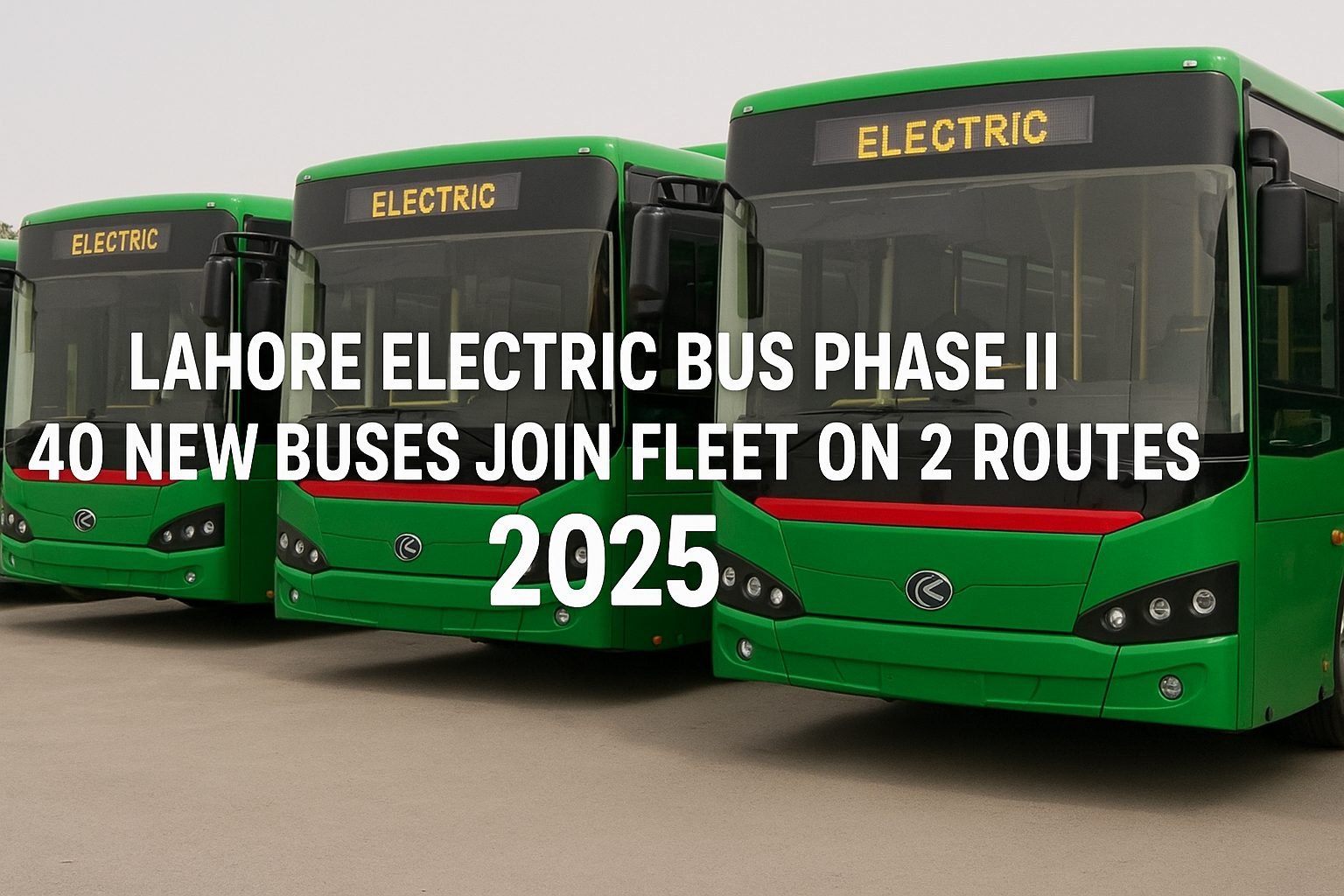
Punjab Chief Minister Maryam Nawaz inaugurated Phase II of the Lahore Electric Bus Project, introducing 40 additional electric buses to the city's growing green transportation fleet. The inauguration ceremony at Expo Centre marked another milestone in Punjab's ambitious plan to revolutionize public transport through environmentally sustainable technology.
This expansion significantly increases Lahore's electric bus capacity while introducing two completely new routes connecting previously underserved areas of the metropolitan region. The development represents not just infrastructure enhancement but a fundamental shift in urban mobility philosophy, prioritizing affordability, accessibility, and environmental responsibility.
New Routes Connecting Key Lahore Districts
Phase II introduces two strategic routes designed to serve high-density residential and commercial zones:
Route 1: Raiwind to Jinnah Terminal (Thokar Niaz Baig) This route connects Raiwind, a significant suburban area, directly to Jinnah Terminal at Thokar Niaz Baig, one of Lahore's major transportation hubs. The connection serves thousands of daily commuters traveling between southern Lahore suburbs and the city's central areas.
Route 2: Jinnah Terminal (Thokar Niaz Baig) to Harbanspura The second route links Jinnah Terminal to Harbanspura, creating east-west connectivity that complements existing transportation networks. Harbanspura represents a densely populated residential and industrial area where affordable public transport addresses genuine community needs.
These routes integrate with existing electric bus services, creating expanding network coverage that makes electric buses accessible to broader segments of Lahore's population. The strategic route planning reflects analysis of commuter patterns and transportation demand rather than arbitrary corridor selection.
Ambitious Expansion Timeline: 500 Buses by December
During the inauguration, Chief Minister Maryam Nawaz announced that 70 additional electric buses will join Lahore's fleet by December 2025, bringing the total to 500 buses serving the Lahore Division. This aggressive expansion timeline demonstrates governmental commitment to rapid public transport transformation.
The December target represents nearly doubling the current fleet within months. Achieving this requires coordinated efforts across multiple domains including vehicle procurement, driver training, charging infrastructure development, and route planning. The ambitious schedule signals that electric bus deployment has moved beyond pilot project status into full-scale implementation.
The 500-bus target positions Lahore among South Asia's leading cities in electric public transport adoption. For context, many regional metropolitan areas continue operating entirely conventional diesel bus fleets, making Lahore's transition noteworthy both nationally and regionally.
Regional Expansion Beyond Lahore
The Chief Minister disclosed that electric bus services will soon expand to Nankana Sahib, Kasur, and Sheikhupura, building on successful operations already running in Mianwali, Wazirabad, Sargodha, and Sahiwal where passenger numbers have exceeded initial projections.
This multi-city approach transforms electric buses from a Lahore-specific initiative into a comprehensive Punjab-wide transportation strategy. The expansion demonstrates that electric bus technology performs effectively across diverse urban contexts, from large metropolitan areas to medium-sized cities.
Current Operational Cities:
- Lahore (expanding to 500 buses)
- Mianwali (operational)
- Wazirabad (operational)
- Sargodha (operational with positive ridership)
- Sahiwal (operational with strong demand)
Upcoming Expansion Cities:
- Nankana Sahib (planned)
- Kasur (planned)
- Sheikhupura (planned)
The success in smaller cities like Mianwali and Wazirabad validates the technology's scalability and demonstrates that electric buses serve diverse population centers effectively, not just major metropolitan areas.
Affordability: Rs20 Fare with Free Travel for Vulnerable Groups
The fare structure maintains affordability at just Rs20 per journey, while students, senior citizens, and individuals with disabilities travel completely free. This pricing philosophy prioritizes accessibility over cost recovery, recognizing public transportation's social service dimensions.
The Rs20 fare represents significant value compared to alternative transportation options. Conventional bus services typically charge Rs30-50 for comparable distances, while ride-sharing services and rickshaws cost substantially more. The affordable pricing makes electric buses accessible to lower and middle-income residents who constitute the majority of public transport users.
The free travel provision for students, seniors, and differently-abled individuals addresses equity considerations often overlooked in transportation planning. Students benefit from reduced education costs through eliminated commuting expenses, while seniors and disabled passengers gain mobility independence without financial barriers.
Modern Amenities Setting New Public Service Standards
The electric buses feature comprehensive modern amenities including Wi-Fi connectivity, CCTV security cameras, mobile charging ports, and wheelchair access ramps. These features transform public buses from basic transportation into comfortable, technology-enabled travel experiences.
Technology Features:
- Wi-Fi Connectivity: Passengers can browse internet, check emails, or stream content during commutes, converting travel time into productive or entertainment periods
- CCTV Cameras: Multiple security cameras throughout buses enhance passenger safety and deter misconduct
- USB Charging Ports: Mobile device charging eliminates battery anxiety during longer journeys
- GPS Tracking: Real-time location tracking enables passengers to monitor bus arrivals and plan journeys accurately
Accessibility Features:
- Wheelchair Ramps: Motorized ramps enable independent boarding for wheelchair users without assistance requirements
- Low-Floor Design: Reduced step height accommodates elderly passengers and those with mobility limitations
- Designated Wheelchair Spaces: Secured areas allow wheelchair users to travel safely without transferring to seats
- Audio Announcements: Stop announcements assist visually impaired passengers
These comprehensive amenities establish new benchmarks for Pakistani public transportation. Previously, most public buses offered minimal facilities—basic seating and minimal climate control. The electric buses demonstrate that public transport can match or exceed private vehicle comfort while maintaining affordability.
Environmental and Economic Benefits
Electric buses eliminate direct emissions in urban environments, contributing to improved air quality in Lahore and other Punjab cities. The environmental benefits extend beyond local air quality to national energy security by reducing petroleum import dependence.
Emission Reductions: Each electric bus replaces a conventional diesel bus that typically emits several tons of CO2 annually along with particulate matter, nitrogen oxides, and other pollutants. The 500-bus Lahore fleet will prevent thousands of tons of emissions annually, creating measurable air quality improvements.
Operating Cost Advantages: Electricity costs substantially less per kilometer than diesel fuel. This operating efficiency allows the government to maintain low Rs20 fares while achieving financial sustainability. Maintenance costs also decrease due to electric drivetrains' simpler mechanical systems compared to diesel engines.
Energy Security: Pakistan imports substantial petroleum products, consuming precious foreign exchange. Electric buses powered by domestically generated electricity—whether from hydro, coal, nuclear, or renewable sources—reduce this import dependence and improve trade balance.
Charging Infrastructure Development
Supporting 500 electric buses requires extensive charging infrastructure. Each bus can travel approximately 250 kilometers on a full charge, requiring strategic charging station placement to maintain service reliability.
The Punjab government has established charging depots at bus terminals and strategic locations throughout Lahore. These facilities include rapid charging capabilities that minimize buses' offline time between routes. The infrastructure investment demonstrates long-term commitment beyond just vehicle acquisition.
Charging infrastructure expansion parallels fleet growth, ensuring new buses enter service with adequate support systems. This coordinated approach prevents operational bottlenecks that could undermine service reliability and public confidence.
Comparison with Other Transportation Options
The electric bus expansion enhances public transportation options in Punjab's major cities. However, diverse transportation needs require varied solutions beyond public buses alone.
For Daily Urban Commuting: Electric buses excel for routine trips within Lahore, offering predictable schedules, defined routes, and unbeatable affordability. Regular commuters benefit most from the Rs20 fare and modern amenities during daily travel.
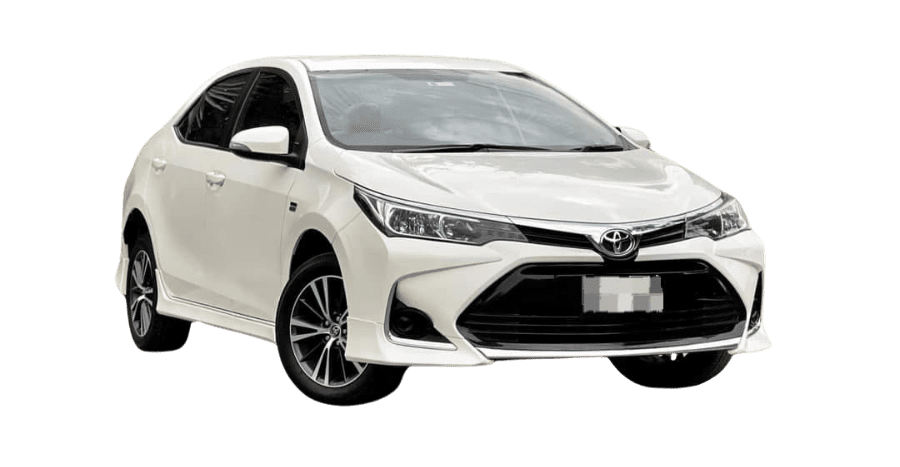
For Intercity Travel: While electric buses serve intra-city needs effectively, intercity transportation between Lahore, Islamabad, Rawalpindi, Faisalabad, and other major cities requires different solutions. Professional car rental services provide door-to-door convenience, flexible scheduling, and comfort for business trips and family travel.
For Airport Transfers: Public buses don't typically serve airport routes optimally due to luggage constraints and schedule inflexibility. Professional airport car rental services in Lahore and other cities offer dedicated transportation matching flight schedules and accommodating travelers' specific needs.
For Business Travel: While public buses serve general commuting, business professionals often require flexible transportation allowing multiple stops, meeting attendance, and client visits. Professional car rental with drivers provides the flexibility business travel demands.
Al Farooq Rent a Car serves clients across Islamabad, Rawalpindi, Lahore, and other major Pakistani cities with comprehensive vehicle rental solutions. Their diverse fleet accommodates various requirements from executive sedans for corporate travel to spacious SUVs for family journeys. Professional drivers familiar with routes throughout Punjab ensure comfortable, reliable transportation whether traveling within cities or making intercity trips to Faisalabad, Multan, or other destinations.
Lessons from International Electric Bus Adoption
Pakistan's electric bus initiative follows successful international examples demonstrating this technology's viability:
China: Operates over 500,000 electric buses, representing nearly all global electric bus fleet. Chinese cities like Shenzhen converted entire bus fleets to electric, proving large-scale feasibility.
Europe: Cities including London, Amsterdam, and Stockholm steadily expand electric bus operations, targeting complete fossil fuel phase-outs by 2030-2040.
India: Delhi, Mumbai, and other Indian cities deploy electric buses addressing air quality crises through transportation electrification.
Latin America: Santiago, Chile, and Bogotá, Colombia operate significant electric bus fleets, demonstrating technology's effectiveness in developing country contexts.
Pakistan's adoption positions it among progressive nations recognizing electric public transport's environmental and economic advantages. The rapid deployment schedule suggests confidence based on these international precedents.
Challenges and Implementation Considerations
Despite positive developments, electric bus deployment faces ongoing challenges:
Initial Capital Costs: Electric buses cost more upfront than diesel equivalents, requiring substantial initial investment despite lower operating costs.
Battery Technology: Battery performance, lifespan, and replacement costs significantly impact total ownership costs. Technology improvements continue, but current batteries eventually require expensive replacement.
Charging Infrastructure: Adequate charging facilities require continued investment proportional to fleet expansion. Infrastructure gaps could constrain future growth.
Driver Training: Electric vehicles require different operating procedures than conventional buses. Comprehensive driver training ensures safe, efficient operation.
Maintenance Expertise: Specialized electric vehicle maintenance requires technical training for workshop staff and spare parts availability systems.
The Punjab government's sustained investment and phased rollout approach addresses these challenges systematically, building capability alongside fleet expansion.
Impact on Traffic Congestion and Urban Mobility
Electric buses improve urban mobility beyond just providing transportation options. Increased public transport ridership reduces private vehicle use, potentially decreasing traffic congestion on Lahore's crowded roads.
The affordability factor particularly encourages modal shift from personal motorcycles and cars to public buses. If 500 buses serve 50,000 daily passengers who would otherwise use private vehicles, the cumulative traffic reduction becomes significant.
However, sustainable congestion reduction requires comprehensive transportation planning beyond just bus services. Road infrastructure development, traffic management systems, and mixed-use urban planning all contribute to holistic mobility solutions.
Future Expansion Plans Beyond Current Announcements
The 500-bus Lahore target and expansion to additional cities represent current publicly announced plans. However, broader ambitions exist for comprehensive electric bus networks throughout Punjab.
Feasibility studies reportedly examine electric bus viability in Gujranwala, Gujrat, Rahim Yar Khan, Sargodha, Sheikhupura, and Sialkot. These assessments will inform future deployment decisions and expansion timelines.
Long-term visions envision electric buses as standard public transportation across all Punjab divisions, not just select cities. Achieving this requires sustained political commitment, continued financial investment, and operational capacity building over years.
Relevance for Residents of Islamabad and Rawalpindi
While current Phase II specifically serves Lahore, the broader electric bus programme holds implications for twin city residents. Punjab's success may influence similar initiatives in Islamabad Capital Territory and Rawalpindi district.
Islamabad already operates Metro Bus service on conventional technology. Electric conversion would align with the capital's environmental aspirations and modern city image. Rawalpindi could benefit from similar electric bus networks addressing its dense urban transportation needs.
Residents of Islamabad and Rawalpindi traveling to Lahore or other Punjab cities with electric bus services can experience this modern public transport firsthand. For intercity travel to Lahore, professional car rental services between Islamabad and Lahore provide comfortable alternatives to conventional intercity buses, combining convenience with reliability.
Public Response and Ridership Trends
CM Maryam Nawaz noted that existing electric bus services in Mianwali, Wazirabad, Sargodha, and Sahiwal have experienced passenger numbers exceeding initial expectations. This strong ridership validates the service model and justifies continued expansion.
High ridership reflects several factors: affordable Rs20 fares, modern amenities attracting passengers who might otherwise avoid public transport, and route planning serving genuine commuter needs. The combination creates compelling value propositions even for residents who could afford alternative transportation.
Positive public reception suggests electric buses address genuine needs rather than representing purely symbolic environmental gestures. When government initiatives deliver tangible citizen benefits, public support strengthens and sustainability improves.
Economic Development and Job Creation
The electric bus programme creates employment across multiple sectors:
Direct Employment: Bus drivers, maintenance technicians, charging station operators, and administrative staff all gain employment through fleet expansion.
Indirect Employment: Vehicle manufacturing, parts supply, charging infrastructure construction, and related industries generate additional jobs.
Economic Multiplier Effects: Employee spending in local economies creates further economic activity beyond direct programme expenditure.
The emphasis on local manufacturing and assembly rather than complete import dependence maximizes domestic economic benefits while building national electric vehicle industry capability.
Frequently Asked Questions About Lahore Electric Bus Services
Q: Can tourists and visitors use Lahore's electric buses?
A: Yes, electric bus services operate as public transportation accessible to anyone. The Rs20 fare applies universally, and no advance booking or registration is required. Simply board at designated stops and pay the fare.
Q: Where can I find electric bus route maps and schedules?
A: Route information is available through the Punjab government's official websites and mobile applications. Major stops along the Raiwind-Jinnah Terminal and Jinnah Terminal-Harbanspura routes display schedule information.
Q: Can I bring luggage on electric buses?
A: Personal luggage within reasonable limits is permitted. However, electric buses serve primarily as urban commuter transport rather than long-distance travel, so excessive luggage may prove impractical during peak hours.
Q: Are the electric buses air-conditioned?
A: Yes, the electric buses feature climate control systems providing cooling during summer and heating during winter, ensuring passenger comfort across seasons.
Q: Will electric bus services expand to Islamabad and Rawalpindi?
A: No official announcements confirm electric bus deployment in the twin cities. However, Punjab's success may influence similar initiatives in Islamabad Capital Territory. Current Metro Bus services in Islamabad and Rawalpindi use conventional technology.
Q: Can I track electric buses in real-time?
A: The buses include GPS tracking systems. Real-time tracking through mobile applications may become available as the system matures, though current availability should be confirmed through official channels.
Q: What happens if an electric bus breaks down mid-route?
A: The transport authority maintains support systems for mechanical issues including backup buses and rapid response teams. The comprehensive CCTV and GPS systems enable quick problem identification and resolution.
Q: For travel from Islamabad to Lahore, should I use intercity buses or car rental?
A: This depends on personal preferences and specific needs. Intercity buses offer economy, while professional car rental services provide flexibility, door-to-door convenience, and comfort particularly valuable for business travel or family trips with luggage.
Q: Are there security concerns using electric buses late at night?
A: The comprehensive CCTV coverage, professional drivers, and monitored operations enhance security. However, as with any public transportation, passengers should exercise standard safety awareness, particularly during late hours.
Q: Can I use electric buses to reach Lahore Airport?
A: Current routes don't specifically serve the airport. For airport transfers, professional airport car rental services in Lahore and other cities provide dedicated transportation matching flight schedules and accommodating luggage requirements.