
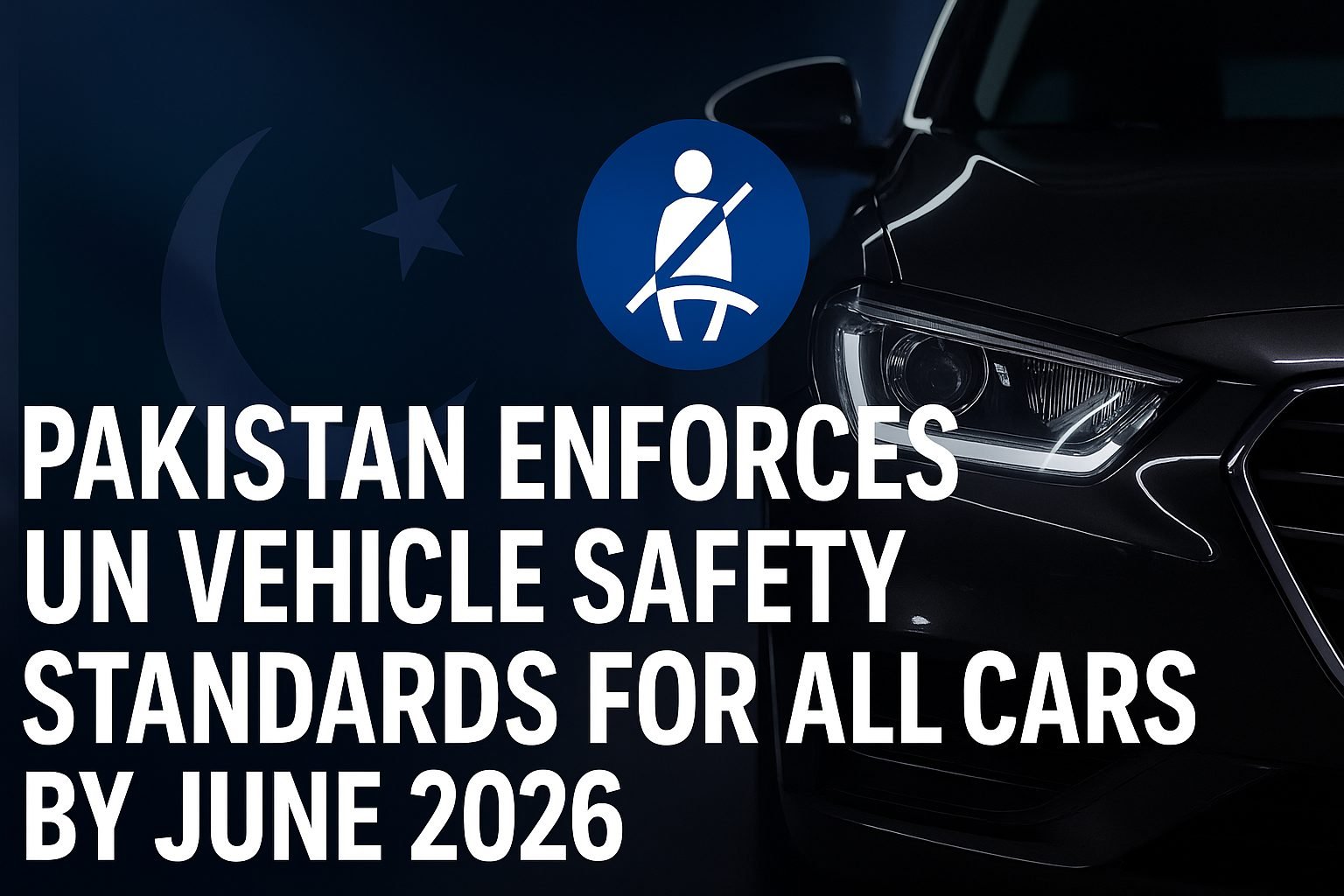
The Ministry of Industries and Production has introduced sweeping regulations that will transform Pakistan's automotive landscape. For the first time in the country's history, both imported and locally manufactured vehicles must comply with comprehensive international safety standards. This regulatory shift represents a watershed moment for road safety and environmental protection in Pakistan.
The Engineering Development Board has mandated compliance with WP-29 standards, a framework established by the United Nations World Forum for Harmonisation of Vehicle Regulations. These regulations cover everything from basic safety features to advanced environmental protections, marking a significant departure from previous lax enforcement practices.
Understanding WP-29 Standards and Their Scope
The new regulations encompass braking systems, airbags, seat belts, lighting, and crash protection for frontal, side, and pole impacts. Additional requirements include child restraints, head restraints, tyre safety, steering systems, vehicle glazing, noise control, and exhaust emissions.
For electric and hydrogen-powered vehicles, the standards extend to battery safety protocols, charging system requirements, and high-voltage protection measures. This comprehensive approach addresses both traditional combustion engines and emerging vehicle technologies.
The federal cabinet ratified this decision based on recommendations from the Economic Coordination Committee. The implementation demonstrates Pakistan's commitment to aligning with international automotive standards and improving passenger protection on national roads.
Previously, Pakistani manufacturers complied with only 18 out of 200 international safety standards. This regulatory gap created significant disparities between vehicle safety levels in Pakistan compared to global markets. The new enforcement addresses this deficiency systematically.
Import Requirements and Pre-Shipment Inspections
Importers now face stringent verification procedures before vehicles enter Pakistan. All imported units must obtain pre-shipment inspection certificates from approved agencies such as JAAI in Japan or KTL in Korea. These certificates verify that vehicles are roadworthy, with functional airbags, unaltered odometers, and no structural damage.
Only companies incorporated under the Companies Act 2017 with adequate capital and established after-sales service networks can import used vehicles. This requirement ensures that importers maintain long-term presence and support infrastructure rather than operating as fly-by-night operations.
Upon arrival in Pakistan, vehicles undergo additional post-shipment inspections at designated centers. This dual-layer verification system minimizes the risk of substandard or unsafe vehicles entering the domestic market.
The import regulations also specify that companies must maintain proper documentation and traceability for each vehicle. This creates accountability throughout the supply chain and facilitates recalls if safety issues emerge.
Compliance Deadline and Enforcement Measures
Automakers have until June 30, 2026, to achieve full compliance. After this deadline, the EDB gains authority to revoke licenses for non-compliant companies. This timeline provides manufacturers with adequate preparation time while maintaining pressure for genuine reform.
Companies facing technological or financial challenges can apply for extensions of up to two years. However, such extensions require detailed justification and implementation plans. The government aims to balance industry capacity with public safety imperatives.
Non-compliance carries serious consequences beyond license revocation. Companies may face financial penalties, import restrictions, and reputational damage in a market increasingly conscious of safety standards.
The enforcement mechanism includes regular audits, spot checks, and consumer complaint channels. This multi-pronged approach ensures continuous monitoring rather than one-time certification.
Industry Response and Implementation Concerns
Automotive industry representatives have expressed mixed reactions to the new framework. Amir Allawala from the Pakistan Association of Automotive Parts & Accessories Manufacturers questioned whether the EDB possesses adequate technical capacity to regulate such comprehensive standards.
Industry stakeholders note that many local assemblers already follow international standards aligned with Japanese, Korean, or Chinese manufacturing practices. However, formal certification and systematic enforcement remained absent until now.
A major concern involves testing infrastructure. If Pakistan fails to establish certified domestic testing laboratories, manufacturers must test components abroad. This increases production costs and creates foreign exchange outflows that could impact vehicle pricing.
The regulatory framework also triggered jurisdictional conflicts. The EDB's expanded authority sidelines the Pakistan Standards and Quality Control Authority, the country's legally mandated standards body under the Ministry of Science and Technology. This overlap raises questions about coordination and potential duplication of efforts.
Impact on Vehicle Safety and Road Transportation
Pakistan's road safety record demands urgent attention. Road accidents claim thousands of lives annually, with vehicle defects contributing significantly to collision severity. The new standards address this crisis by mandating features that protect occupants during crashes.
Improved braking systems, reinforced structures, and mandatory airbags will reduce fatality rates in accidents. Enhanced lighting and visibility features help prevent collisions, particularly during night driving or adverse weather conditions.
For families traveling between cities, safer vehicles provide peace of mind. Whether commuting between Islamabad and Rawalpindi or undertaking longer journeys to Lahore or Faisalabad, knowing that vehicles meet international safety benchmarks increases travel confidence.
Professional transportation services benefit significantly from these regulations. Companies operating rental fleets must ensure all vehicles comply with new standards, guaranteeing that customers receive safe, reliable transportation regardless of vehicle age or origin.
Environmental and Emission Standards
Beyond safety, the WP-29 framework addresses environmental concerns. Emission limits for both combustion engines and alternative fuel vehicles help reduce air pollution in urban centers like Islamabad, Rawalpindi, Lahore, and Karachi.
Noise pollution standards protect residential areas and improve urban living quality. Stricter fuel efficiency requirements reduce petroleum consumption and associated economic costs.
For electric vehicles, battery safety and charging system standards facilitate the transition toward cleaner transportation. These regulations remove barriers to electric vehicle adoption by ensuring consistent safety and performance standards.
The environmental component aligns with Pakistan's international climate commitments and domestic efforts to combat air pollution. Major cities have already begun enforcing emission sticker requirements, making standardized testing and compliance verification increasingly important.
Implications for Car Rental and Transportation Services
Professional car rental services must adapt their fleets to meet new standards. This presents both challenges and opportunities for the industry. Companies with modern, well-maintained vehicles gain competitive advantages as compliance requirements eliminate substandard competitors.
For travelers seeking reliable transportation in Islamabad or Rawalpindi, the new regulations ensure rental vehicles meet international safety benchmarks. Whether traveling for business, family visits, or tourism, customers can trust that rental fleets undergo proper inspection and maintenance.
The standards particularly benefit long-distance travelers. Journeys between major cities require vehicles with proven safety systems, reliable braking, and proper structural integrity. Professional rental services that invest in compliant vehicles demonstrate commitment to customer safety.
Airport transportation services also benefit from enhanced standards. Travelers arriving at Islamabad International Airport need dependable vehicles for transfers to hotels or business destinations. Rental companies maintaining compliant fleets provide this assurance.
Cost Implications and Market Dynamics
Implementing comprehensive safety standards inevitably affects vehicle pricing. Manufacturers incur costs for upgraded components, testing procedures, and certification processes. These expenses may transfer to consumers through higher vehicle prices.
However, long-term benefits offset initial cost increases. Safer vehicles reduce accident-related medical expenses, insurance premiums, and property damage costs. Families save money by avoiding accidents that could have been prevented through better vehicle design.
The used vehicle market faces particular adjustments. Imported used cars must meet the same standards as new vehicles, potentially increasing prices for budget-conscious buyers. However, this ensures that even economical options provide adequate safety protection.
Rental car rates may also experience modest increases as companies upgrade fleets and implement compliance procedures. Yet customers gain value through enhanced safety, reliability, and peace of mind during travel.
Regional Comparisons and International Alignment
Pakistan's adoption of WP-29 standards brings the country in line with international automotive markets. Many developed nations have enforced similar regulations for decades, resulting in dramatically lower road fatality rates despite higher traffic volumes.
Regional neighbors including India have implemented comparable standards, creating competitive pressure for Pakistan to modernize its automotive sector. International automotive manufacturers operating in Pakistan already design vehicles to these specifications for global markets, making local compliance more feasible.
The alignment facilitates technology transfer and investment. International manufacturers comfortable with familiar regulatory frameworks will more readily establish operations or expand existing facilities in Pakistan.
For travelers accustomed to international safety standards, Pakistan's regulatory evolution makes domestic travel more comparable to experiences abroad. This particularly benefits business travelers and tourists who expect consistent vehicle safety regardless of location.
Preparing for the Safety Standards Transition
Consumers, manufacturers, and service providers all face adaptation requirements. Automakers must audit existing production lines, upgrade components, and train staff on new requirements. Importers need to establish relationships with approved inspection agencies and verify compliance documentation.
Transportation service providers should assess fleet composition and develop upgrade timelines. Companies operating older vehicles may need accelerated replacement schedules to maintain compliance after June 2026.
Consumers planning vehicle purchases should verify that prospective vehicles meet new standards. Even before mandatory enforcement, choosing compliant vehicles provides better safety protection and avoids future complications.
Rental car customers can inquire about fleet compliance when booking. Professional services like Al Farooq Rent a Car that prioritize vehicle safety and maintenance offer reliable options for travelers throughout Islamabad, Rawalpindi, and beyond.
Future of Automotive Safety in Pakistan
The enforcement of comprehensive vehicle safety standards represents just the beginning of automotive sector transformation. Future phases may include additional technologies like autonomous emergency braking, lane departure warnings, and advanced driver assistance systems.
Digital connectivity and vehicle telematics will enable remote monitoring, predictive maintenance, and improved fleet management. These technologies enhance safety while reducing operational costs for transportation providers.
Infrastructure improvements must accompany vehicle standards. Better road conditions, clearer signage, and improved lighting complement safer vehicles to create comprehensive transportation safety systems.
The regulatory evolution also creates opportunities for domestic manufacturing of safety components. Local production of airbags, sensors, and other safety equipment could reduce import dependence while creating employment.
Conclusion
Pakistan's enforcement of UN WP-29 vehicle safety standards marks a transformative moment for the automotive sector. By June 2026, all vehicles on Pakistani roads must meet comprehensive international safety and environmental requirements. This regulatory shift prioritizes passenger protection, environmental sustainability, and global alignment.
While implementation challenges exist, the long-term benefits far outweigh short-term costs. Safer vehicles save lives, reduce accident-related expenses, and improve travel experiences for all road users. Professional transportation services that embrace these standards will lead the industry forward.
For travelers throughout Islamabad, Rawalpindi, and beyond, enhanced vehicle safety standards provide greater confidence in every journey. Whether commuting locally or traveling between cities, knowing that vehicles meet rigorous international benchmarks makes every trip safer and more reliable.
Frequently Asked Questions
What are WP-29 vehicle safety standards?
WP-29 standards are comprehensive vehicle safety regulations developed by the United Nations World Forum for Harmonisation of Vehicle Regulations. They cover braking systems, airbags, crash protection, emissions, and numerous other safety features.
When do Pakistani vehicles need to comply with new safety standards?
All automakers must achieve full compliance by June 30, 2026. After this deadline, the Engineering Development Board can revoke licenses for non-compliant manufacturers and importers.
Do these standards apply to used imported vehicles?
Yes, all imported vehicles, both new and used, must meet WP-29 standards. Importers need pre-shipment inspection certificates from approved agencies confirming compliance before vehicles enter Pakistan.
Will vehicle prices increase due to new safety standards?
Some price increases are likely as manufacturers implement upgraded safety features and undergo certification processes. However, long-term savings from reduced accidents and improved reliability may offset initial cost increases.
Where can I rent a safe, compliant vehicle in Islamabad?
Al Farooq Rent a Car maintains a fleet of well-maintained vehicles and prioritizes safety compliance. We serve Islamabad, Rawalpindi, and provide transportation for intercity travel throughout Pakistan.
What happens to vehicles that don't meet the new standards?
Manufacturers and importers of non-compliant vehicles face license revocation after June 30, 2026. Existing vehicles on roads may require retrofitting or retirement depending on specific deficiencies.
Are electric vehicles included in these safety standards?
Yes, the WP-29 framework includes specific standards for electric and hydrogen vehicles, covering battery safety, charging systems, and high-voltage protection measures.
Can I still buy imported used cars after these regulations?
Yes, but imported used vehicles must meet the same WP-29 standards as new vehicles and include proper pre-shipment inspection certification from approved agencies.