
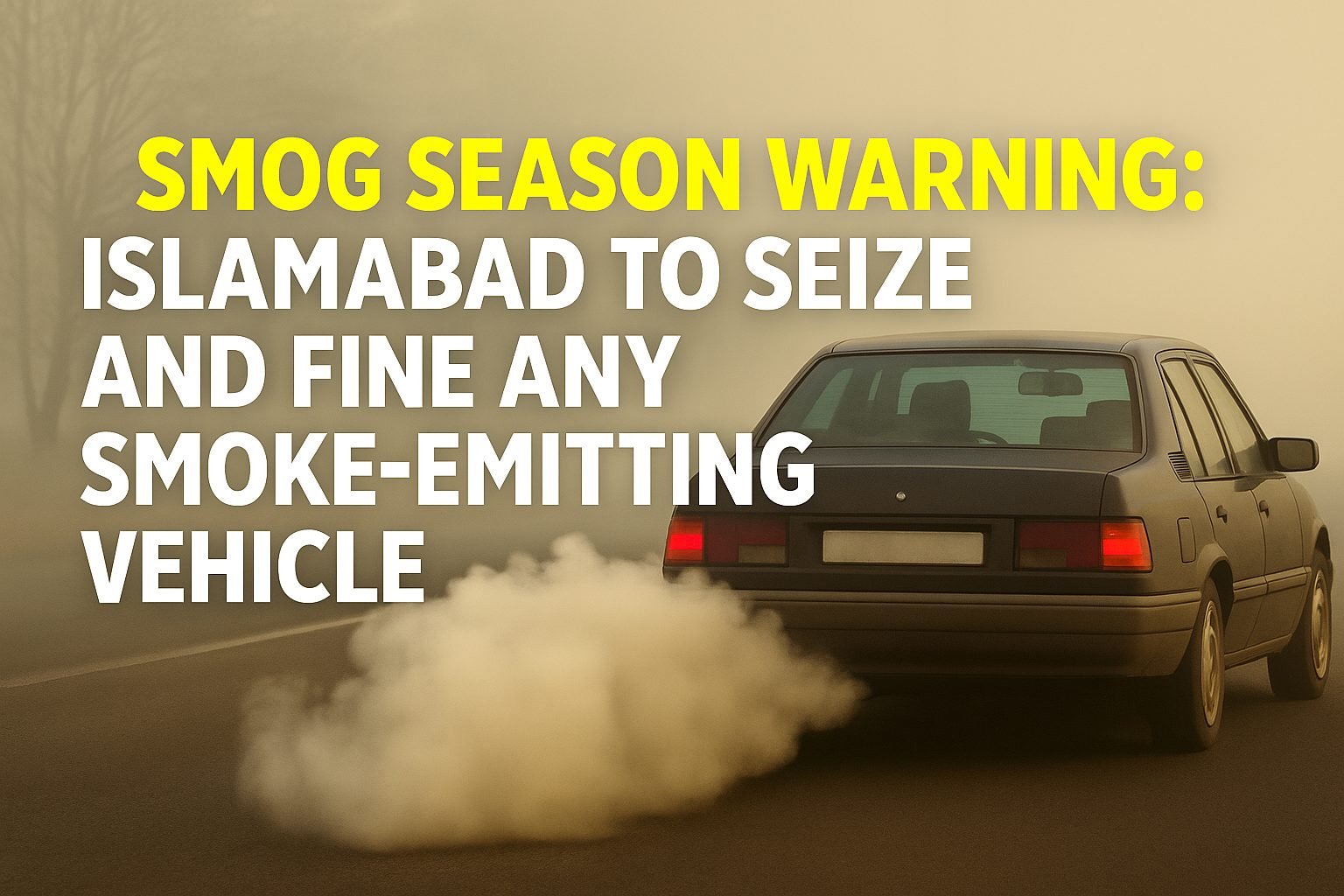
Islamabad has entered a strict enforcement phase against vehicular pollution. The Pakistan Environment Protection Agency (Pak-EPA) has issued a zero-tolerance directive for smoke-emitting vehicles within the capital’s limits, warning that offenders face on-the-spot fines, confiscation, or both. Enforcement teams are now stationed across high-traffic corridors and inspection points, with special focus on poorly maintained diesel buses, freight trucks, wagons, motorcycle-rickshaws (Qingqi), and high-smoke two-wheelers.
This policy shift arrives at the heart of winter smog season, when temperature inversions trap pollutants close to the ground. The stated goal is straightforward: bring visible emissions down quickly, reduce PM2.5 peaks, and protect residents’ health.
What “Zero Tolerance” Means on the Road
Immediate action at checkpoints. Pak-EPA, assisted by field units and municipal partners, will stop visibly polluting vehicles and apply penalties immediately. Repeat offenders can expect heavier fines and longer impounds.
Evidence-based inspections. Roadside inspections will combine visual opacity checks with documentation reviews. Vehicles that cannot meet prescribed emissions standards won’t be allowed to continue operating until faults are rectified.
High-risk fleets under the microscope. Diesel commercial fleets with overdue maintenance are being prioritized. Operators of buses, wagons, delivery vans, and construction carriers should expect frequent audits.
Why the Crackdown Is Urgent: The Health Case
Vehicle exhaust contains PM2.5 and PM10, nitrogen oxides (NOx), carbon monoxide (CO), unburnt hydrocarbons, and secondary pollutants that form ground-level ozone. PM2.5 is particularly harmful; particles can reach deep lung tissue and enter the bloodstream, elevating risks of asthma, COPD, cardiac events, stroke, adverse pregnancy outcomes, and long-term mortality.
Winter weather patterning in Islamabad—calm air, low wind speeds, and nocturnal inversions—exacerbates these effects. Curbing visible smoke delivers fast gains in urban air quality because a small number of high-emitting vehicles often contribute a disproportionate share of total on-road particulate pollution.
Who Is Most at Risk
- Children and older adults: developing or compromised respiratory systems are more sensitive to fine particulates.
- Outdoor workers and commuters: longer cumulative exposure on roadsides and corridors.
- People with cardiac or pulmonary conditions: higher likelihood of acute episodes on high-smog days.
If you or a family member falls into one of these groups, monitor daily AQI, minimize peak-hour exposure, and use well-fitting masks on red-alert days.
Compliance Checklist for Vehicle Owners and Fleet Managers
A few targeted interventions dramatically lower smoke output and help you avoid penalties:
Engine, Fuel, and Exhaust
- Scheduled servicing on time; insist on calibrated diagnostics, injector cleaning, and compression checks.
- Genuine filters: air, oil, and fuel. A clogged air filter can spike visible smoke within weeks.
- No tampering: remove illegal EGR/DPF deletes and restore OEM emissions systems.
- Approved fuels and lubricants: substandard diesel and mismatched oil grades raise soot.
- Leak checks: oil and coolant leaks affect combustion quality and catalytic/DPF performance.
Visual and Functional Indicators
- Cold-start smoke that persists beyond warm-up suggests injector or compression faults.
- Blue smoke: oil burning; black smoke: over-fuelling or air starvation; white smoke: coolant ingress or incomplete combustion—address each symptom promptly.
- Idle quality: rough idle often correlates with high particulate output.
Documentation Readiness
- Keep fitness certificate, registration, and insurance current and accessible.
- Maintain service logs; they help resolve disputes at inspection points and support warranty claims.
Commercial Transport: Practical Steps to Stay Operational
- Quarterly opacity screening for all diesel units; ground a vehicle at first sign of persistent smoke until fault is cleared.
- Driver training on low-smoke driving: gentle throttle application, timely upshifts, avoiding prolonged idling, and proper turbo cooldown.
- Route planning to bypass known checkpoints when a unit is scheduled for maintenance the same day—never to evade compliance, but to avoid predictable delays for near-due vehicles.
- Spare vehicle policy to keep service levels stable while a unit is in rectification.
Public Cooperation Is Part of the Policy
Pak-EPA has framed this as a public health and shared responsibility measure. Citizens are encouraged to report visibly polluting vehicles, cooperate during stop-checks, and keep personal vehicles roadworthy. Well-maintained private cars—especially those with frequent city usage—should pass roadside checks without incident if serviced on schedule.
For official air-quality and regulatory updates, refer to Pakistan’s Ministry of Climate Change & Environmental Coordination.
Travel Plans Without the Headache
Families, business travelers, and inbound visitors who prefer not to manage fitness papers, parking, or checkpoint conversations can switch to driver-operated rentals. A compliant operator brings a maintained vehicle, trained driver etiquette, and documented readiness for inspections—useful during smog season or on airport and embassy runs.
- Book rent a car in Islamabad with a professional driver for errands, meetings, and airport transfers.
- For fixed-price segments and intercity confirmations—Islamabad to Lahore rent a car, Islamabad to Faisalabad rent a car, and airport return legs—review packages on Our Cars & Rates and lock your itinerary.
These options also align with rent a car near me, rent a car with driver, Islamabad airport car rental, and city-to-city car rental searches without exposing you to on-the-spot compliance issues.
Smog-Day Personal Routine That Works
- Check the AQI early; adjust outdoor time when readings are elevated.
- Close cabin air (recirculation) during peak corridors; replace cabin filters on schedule.
- Plan routes that avoid known bottlenecks and underpasses that trap emissions.
- Carry a mask on red-alert days, especially for school pickups and pedestrian segments.
FAQs
What qualifies as a smoke-emitting vehicle in Islamabad?
Any vehicle producing visible exhaust smoke beyond prescribed limits—especially persistent black, blue, or dense white smoke—is liable for penalties and may be grounded until repaired.
Can my vehicle be confiscated on the spot?
Yes. Under the current zero-tolerance posture, officers can levy fines and impound vehicles that fail visible emissions checks or lack valid fitness documentation.
Are motorcycles and Qingqi rickshaws included?
Yes. Two-wheelers and motorcycle-rickshaws with high smoke output are under active enforcement, particularly in congested corridors.
How can commercial fleets minimize disruption?
Adopt pre-emptive maintenance, quarterly opacity checks, driver coaching on low-smoke operation, and a spare-vehicle policy so faulty units can be rectified without missing service windows.
Is there any advantage to booking rentals with drivers during smog season?
A vetted operator maintains paperwork readiness, schedules timely servicing, and manages parking and checkpoints—useful for Islamabad airport car rental and city-to-city car rental when time buffers are tight.
If you’re planning medical visits, embassy appointments, or time-sensitive airport transfers, a compliant, driver-operated vehicle reduces roadside exposure and keeps your day on schedule. Plan with rent a car in Islamabad and confirm rates and segments via Our Cars & Rates.