
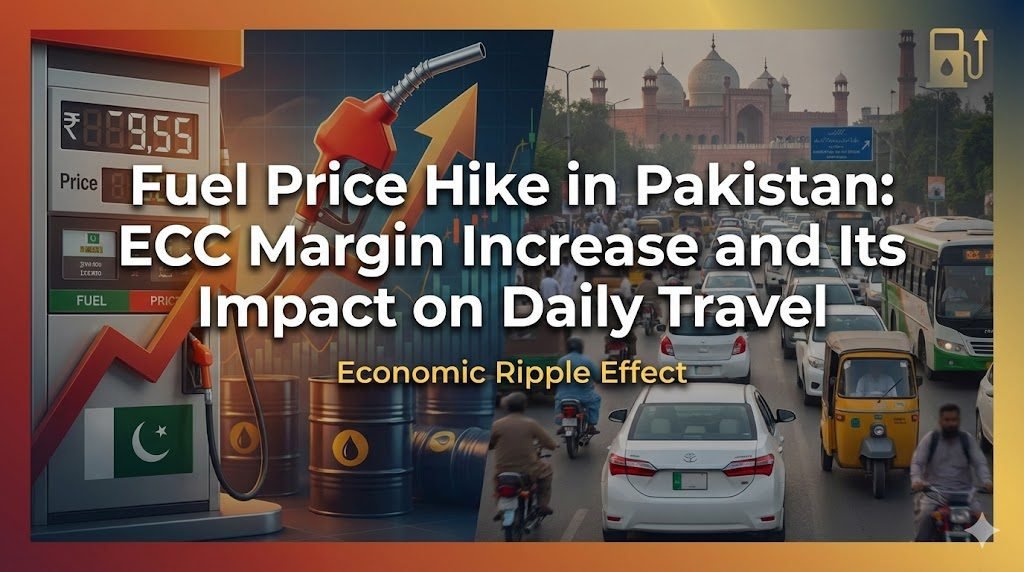
The latest policy shift approved by the Economic Coordination Committee (ECC) has pushed the topic of a fuel price hike in Pakistan back into everyday conversations. By allowing higher margins for Oil Marketing Companies (OMCs) and fuel dealers on petrol and diesel, the government has signalled that pump prices may edge upward in the coming weeks and months.
For motorists in Islamabad, Rawalpindi, Lahore, Faisalabad, Karachi and other major cities, even a small increase per litre affects office commutes, school runs, family trips, and city-to-city journeys. This article walks through what the new decision means, how it links to fuel pricing, and what it could mean for people who drive their own vehicles or rely on services such as rent a car in Islamabad or Rawalpindi.
Background: Why a Fuel Price Hike in Pakistan Is Back in Focus
The ECC is the federal forum that regularly reviews economic measures, including energy pricing and margins for OMCs and fuel dealers. In a recent meeting chaired by the Finance Minister, the committee approved revised margins on motor spirit (petrol) and high-speed diesel for both OMCs and petroleum dealers.
According to official communication from the Ministry of Finance, these margins will now be adjusted based on inflation (CPI) and increased in a band of roughly 5% to 10%. However, there is an important condition:
- Only half of the approved increase will apply immediately.
- The remaining 50% will be granted after a review of digitisation progress in payment and sales systems by June 1, 2026.
This policy links higher earnings for OMCs and dealers to better documentation and transparency in the fuel supply chain. For consumers, the headline point is simple: any rise in margins is normally passed through in the regulated price formula, which is why analysts expect a fuel price hike in Pakistan over the coming pricing cycles.
How the ECC Margin Increase Flows into Pump Prices
Current Margins and the Approved Increase
At the moment, public information indicates margins roughly in the following range for both petrol and diesel:
- OMC margin: around Rs 7.87 per litre
- Dealer margin: around Rs 8.64 per litre
When these are increased by 5% to 10%, the change per litre may look small on paper, but it still matters when multiplied by the total volume sold nationwide and by a household’s monthly consumption. For example:
- A 5% increase on Rs 7.87 is around Rs 0.39 per litre for OMCs.
- A 10% increase on Rs 8.64 is around Rs 0.86 per litre for dealers.
If both margins rise toward the upper band over time, the combined effect could be around Rs 1–1.5 per litre purely from margin revisions. The final price change will depend on global oil benchmarks, the rupee–dollar exchange rate, taxes, and other cost elements in the pricing formula.
Why Even a Small Increase Matters
For a typical driver in Islamabad or Rawalpindi using 50–70 litres of fuel in a month, an additional one or two rupees per litre adds a modest but noticeable amount to monthly travel costs. For businesses operating fleets, ride-hailing vehicles, and logistics vans, the effect scales with every extra kilometre on the road.
That is why the fuel price hike in Pakistan is relevant even when the per-litre change looks minor at first glance. It interacts with:
- Ongoing inflation
- Higher maintenance costs
- Tolls on long motorway journeys
- Rising parking and service charges in larger cities
Expected Impact on Daily Commuters and Households
Urban Commuters in Islamabad and Rawalpindi
In Islamabad and Rawalpindi, many workers use small hatchbacks, compact sedans, and motorbikes for daily commuting between sectors, housing societies, and business districts. Short city trips may not seem fuel-intensive, but congestion and stop-and-go traffic on routes like Islamabad Expressway or Murree Road increase consumption over time.
A higher pump price can:
- Raise the cost of office commutes from suburbs and peripheral housing schemes.
- Affect family budgets for school runs, tuition pick-ups, and weekend visits.
- Push some households to reconsider using multiple vehicles every day.
Intercity Travellers and Motorway Users
For travellers going from Islamabad to Lahore, Islamabad to Faisalabad, or Rawalpindi to Peshawar by motorway, fuel is one of the largest single cost items. A full round trip in a 1300–1800cc sedan can easily consume:
- 50–70 litres of fuel for Islamabad–Lahore return (depending on driving style and vehicle condition).
As the fuel price hike in Pakistan takes effect, these long-distance drives become more expensive for:
- Families visiting relatives on weekends or during holidays
- Students travelling between university and home
- Small traders and sales teams that rely on frequent road travel
Some travellers may respond by:
- Taking fewer unnecessary trips
- Sharing vehicles with relatives or colleagues
- Booking city-to-city car rental when only occasional travel is needed, instead of keeping a personal car solely for long trips.
Effect on Rent-a-Car Services and Professional Drivers
Rising Fuel Costs and Chauffeur-Driven Trips
Services such as rent a car in Islamabad or rent a car in Rawalpindi have their own operating challenges when fuel margins rise. Even if a company runs fuel-efficient sedans, crossovers, or hybrid vehicles, each increase in per-litre cost reduces profit margins unless rates are revised.
Most professional services build fuel into:
- Per-day or per-trip charges for local city use
- Per-kilometre rates for motorway journeys
- Special packages for Islamabad airport car rental and executive transfers
When fuel costs rise, these structures are often recalibrated. However, organised services can usually plan their pricing and vehicle allocation more carefully than individual car owners. That is where a company like Al Farooq Rent a Car can still remain attractive for:
- Business travellers arriving at Islamabad International Airport
- Families who need a rent a car for family trips a few times a year
- Travellers planning Islamabad to Lahore rent a car journeys with a dedicated driver
For example, someone based in an apartment in Islamabad might prefer to use ride-hailing or rent a car with driver only for specific trips instead of bearing the full cost of owning, fuelling and maintaining a large vehicle year-round.
Within this context, users who want structured pricing and fleet options can review the detailed vehicle list and fuel-inclusive packages on the official Our Cars & Rates page of Al Farooq Rent a Car.
Why the ECC Is Linking Margin Increases to Digitisation
The Push for Digital Documentation
One of the most important aspects of the ECC decision is the condition tied to digitisation. Only half of the approved increase in OMC and dealer margins will be released immediately, while the remaining portion depends on progress in modernising payment and sales systems by mid-2026.
This means fuel companies and dealers are expected to move further toward:
- Electronic invoicing
- Digital transaction records
- Centralised reporting of sales volumes
For the government and regulators, this can reduce under-reporting, improve tax collection, and help track consumption patterns more accurately.
How Consumers May Benefit from Digitisation
While the direct link is not always visible at the fuel pump, stronger digital systems can support:
- Clearer invoices and receipts for corporate and SME fuel claims
- Better monitoring of fuel quality and quantity disputes
- Easier auditing of fleet expenses for companies using city-to-city car rental or delivery vans
In time, this kind of transparency can strengthen trust between end users and the fuel retail network, even if it is not an immediate solution to high prices.
Fuel Price Hike in Pakistan and Long-Term Travel Planning
Choosing Vehicles and Travel Patterns Carefully
With inflation already shaping household budgets, the fuel price hike in Pakistan encourages drivers to think more deliberately about how and when they travel. Some practical approaches include:
- Using fuel-efficient vehicles, especially for daily commuting in Islamabad and Rawalpindi
- Ensuring tyres are properly inflated and vehicles are regularly tuned, which reduces fuel waste
- Combining errands into fewer trips rather than multiple short drives across the day
- Coordinating school pickups or office travel with neighbours or colleagues to share fuel costs
For those who only need a car occasionally—for example, for an outstation trip a few times a year—it may be more rational to rely on city-to-city car rental instead of owning a second vehicle.
When Renting Makes More Sense than Owning
Owning a vehicle brings ongoing fixed costs:
- Depreciation
- Regular maintenance
- Insurance and token tax
- Fuel price exposure every single month
On the other hand, renting a car for limited but important journeys can:
- Shift maintenance and inspection responsibility to the service provider
- Provide access to newer or more comfortable vehicles for motorway journeys
- Allow families to pick the right vehicle category for each occasion (sedan, MPV, SUV)
In Islamabad and Rawalpindi, people who need reliable transport for a wedding, airport transfer, or intercity meeting often compare the full trip cost of rent a car in Islamabad with the fuel, tolls, and wear-and-tear on their own car. When fuel prices rise, this comparison becomes even more relevant.
Travel planners who want structured options for Islamabad-based trips can refer to the rent a car in Islamabad page of Al Farooq Rent a Car for chauffeur-driven choices.
Following Official Announcements on Fuel Prices
Fuel prices in Pakistan are generally reviewed twice a month, and changes reflect:
- International oil benchmarks
- Exchange rate movements
- Tax and levy decisions
- OMC and dealer margins
Official updates are usually shared through government channels and publicised after approval. For accurate information on upcoming adjustments linked to the ECC margin decision, it is safest to rely on communications from agencies such as the Ministry of Finance rather than rumours or unverified social media posts.
Motorists can then plan their refuelling schedule around confirmed changes instead of speculation.
FAQs
1. What is driving the latest fuel price hike in Pakistan?
The expected fuel price hike in Pakistan is mainly linked to the ECC’s decision to increase margins for OMCs and fuel dealers based on inflation, within a band of 5% to 10%.
These revised margins are added to other components in the fuel price formula, which already includes international oil prices, exchange rates, and taxes. When margins go up, the final pump price normally rises unless other components fall enough to offset the change.
2. When will the ECC-approved margin increase affect petrol and diesel prices?
Half of the approved increase in OMC and dealer margins has been allowed immediately, so its impact can appear in upcoming pricing cycles once the government publishes new rates. The remaining half is conditional and will only be implemented after progress in digitising payment and sales systems is reviewed around June 1, 2026.
3. How much extra might motorists pay per litre?
Exact changes depend on the detailed pricing notifications, but the approved adjustment range (5%–10%) on existing margins suggests an increase of roughly around one rupee per litre when OMC and dealer components are combined. This may seem modest, yet it adds up over many refuelling cycles and interacts with any separate changes in global oil prices and taxes.
4. How can intercity travellers between Islamabad and Lahore manage higher fuel costs?
Travellers who frequently move between Islamabad and Lahore can respond in several ways:
- Planning trips more efficiently instead of making multiple short visits
- Sharing vehicles with colleagues or relatives on the same route
- Using Islamabad to Lahore rent a car options with a professional driver, especially when the cost is shared among several passengers
For some travellers, city-to-city car rental can provide predictable pricing and reduce the stress of driving long distances themselves.
5. Does using a rent a car in Islamabad or Rawalpindi help with rising fuel prices?
In some situations, yes. When fuel is expensive, many people prefer to avoid maintaining a second car just for occasional trips. Using a rent a car in Islamabad or rent a car in Rawalpindi for business meetings, airport transfers, or family tours allows them to:
- Pay only for the days and distances they actually travel
- Use vehicles that are already inspected and maintained by a professional operator
- Benefit from chauffeur-driven services that manage fuel planning and route choices
Services such as Al Farooq Rent a Car can therefore function as a practical alternative to ownership for households seeking more control over their travel expenses.