
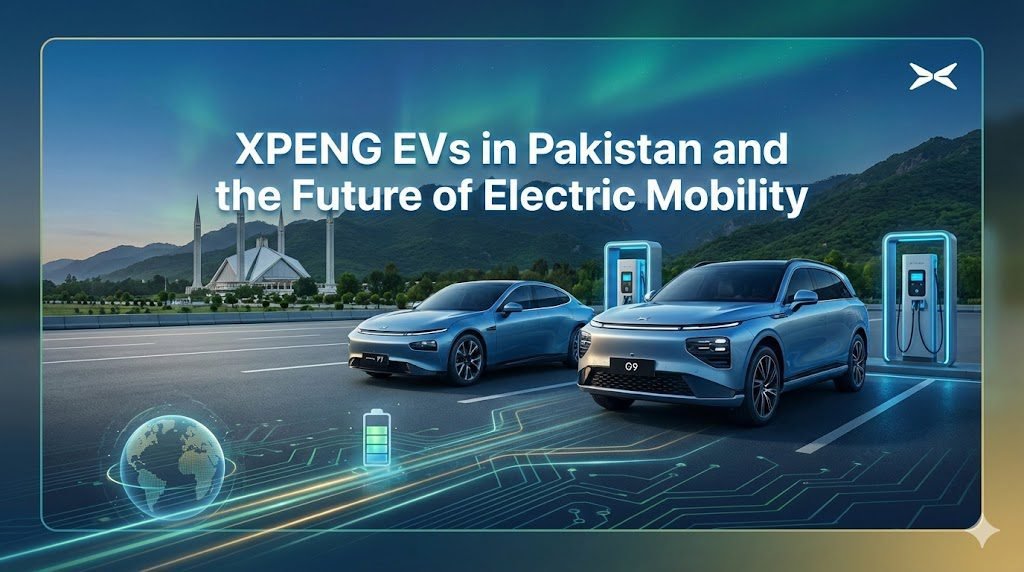
China’s XPENG EVs in Pakistan are already a big talking point in auto and tech circles. Local reports indicate that the brand is working with Pakistani partners to bring its electric SUVs and sedans here, with early discussions focused on models like the G6 and G9. At the same time, XPENG’s urban air mobility projects – often described as “flying cars” – are moving from concept to real tests in markets such as the UAE and China.
For Pakistan, where fuel prices, traffic congestion, and air quality are consistent concerns, XPENG’s arrival would not just add another Chinese badge to the roads. It would signal that the local EV market is entering a more mature phase, where global technology-focused brands see long-term potential rather than short-term experimentation.
XPENG Motors: From Chinese EV Challenger to Global Tech Brand
XPENG Motors was founded in 2014–2015 in Guangzhou and has grown into one of China’s prominent electric vehicle manufacturers, with backing from firms such as Alibaba. The company positions itself as a software-driven automaker: over-the-air (OTA) updates, advanced driver assistance (XPILOT), and highly digital cabins are central to its vehicles rather than optional add-ons.
The brand’s strategy is clear: compete not only on battery range and pricing, but also on intelligence – automated driving functions, route planning, voice-controlled cabins, and tight integration between the car and cloud services. In markets like Norway and the Netherlands, XPENG already sells EVs and uses those regions as test beds for global expansion.
For Pakistan, that mindset matters. Drivers in Islamabad, Rawalpindi, Lahore, Karachi, and Faisalabad increasingly expect modern infotainment, active safety features, and better comfort, not just a basic EV powertrain. XPENG’s brand identity aligns with that shift.
XPENG EV Lineup That Could Reach Pakistan
Several XPENG models are already in production globally. Local media coverage and industry talk suggest that if XPENG enters Pakistan, the focus will likely be on crossovers and SUVs, especially the G6 and G9, supported by at least one sedan and possibly a spacious MPV later.
XPENG P7: Long-Range Electric Sedan
The XPENG P7 (and its updated P7i version) is a sleek mid-size electric sedan built to appeal to premium buyers who want range and tech without going to legacy luxury brands. Depending on configuration, the P7 offers a rated range of up to around 570+ km on certain Chinese test cycles, with dual-motor all-wheel-drive variants capable of 0–100 km/h in just over 4 seconds.
A low drag coefficient, battery-thermal management, and XPILOT driver assistance make it suitable for long highway runs such as Islamabad–Lahore or Lahore–Faisalabad, provided charging infrastructure is available along the route. For urban use in Islamabad and Rawalpindi, its range is more than enough for weekly commuting with home or workplace charging.
XPENG G6: Mid-Size Electric SUV for Daily Use
The XPENG G6 is a mid-size coupe-style SUV built on the company’s 800-volt electric platform. XPENG highlights that, on suitable DC fast chargers, the G6 can add hundreds of kilometres of range in around 10–15 minutes under ideal conditions.
That level of fast charging could be especially useful on Pakistani motorways as dedicated EV charging stations expand. For families who currently rely on crossovers like Sportage or Tucson for intercity trips, a G6-class EV offers similar practicality:
- Higher ground clearance than a sedan
- Folding rear seats for luggage
- Comfortable suspension designed for mixed city and highway use
If priced correctly, the G6 could become the core XPENG product for urban and intercity EV users here.
XPENG G9: Flagship SUV with High-End Tech
The XPENG G9 is positioned as a flagship SUV. It uses an 800V architecture with ultra-fast DC charging, advanced driver assistance, and a very tech-heavy interior – multiple screens, high-power audio, and refined cabin materials.
For Pakistan’s upper-tier buyers – corporate executives, business owners in Karachi or Lahore, and overseas Pakistanis investing in high-spec vehicles – the G9 fits where full-size SUVs traditionally sit. In an EV context, this could appeal to those who currently consider vehicles like Audi e-tron or BYD’s larger crossovers.
In rental and chauffeur fleets, a G9-level SUV could eventually serve premium airport transfers or executive rides between Islamabad and Rawalpindi, especially once DC fast chargers at major fuel stations become more common.
XPENG X9: Electric MPV for Space-Focused Users
The XPENG X9 is a three-row electric MPV, designed as a family and people-mover with advanced aerodynamics, 800V platform, and very flexible seating. xpeng.com
If XPENG ever brings the X9 to Pakistan, it would compete in a niche currently served mainly by large ICE vans and MPVs. For large families in Lahore or Karachi, or for airport hotel shuttles in Islamabad, an X9-type vehicle could reduce fuel spending and tailpipe emissions while still offering roomy seating and luggage capacity.
Pakistan’s EV Landscape and Where XPENG Fits
Pakistan’s National Electric Vehicle Policy (NEVP) 2020–2025 sets targets for EV adoption across cars, two- and three-wheelers, and heavy vehicles. Incentives include sharply reduced customs duties on EV parts, lower sales tax for certain locally produced EVs, and reduced taxes on batteries and charging equipment.
More recently, regulators have also rationalised electricity tariffs for EV charging stations, with a dedicated per-kWh tariff to make commercial charging financially viable. Islamabad is targeted as a model EV city, with plans on the policy side to encourage charging facilities at fuel stations and key locations.
In parallel, the federal government has announced consumer-side subsidies for certain EV segments, including support per kilowatt-hour for four-wheel electric vehicles. Combined with the arrival of players like BYD, which plans local assembly near Karachi, Pakistan’s EV environment is moving step-by-step from experimental imports toward a structured market with manufacturing, charging, and policy support.
XPENG EVs in Pakistan would likely join this second wave: brands that see a long-term business case supported by policy and infrastructure rather than short-term high-margin niche imports.
XPENG EVs in Pakistan: Opportunities and Obstacles
For Pakistani drivers, XPENG vehicles promise several potential advantages:
- Long range and high-efficiency batteries suited to city and motorway driving
- Strong active safety features, including ADAS and multiple airbags
- Over-the-air updates that can refine features without a workshop visit
However, genuine challenges remain:
- Initial Pricing and Duties
Even with incentives, fully built imported EVs can be expensive once customs duties, freight, and dealer margins are included. Premium XPENG models such as the G9 will sit in a price bracket that only a small share of buyers can consider. - Charging Network Readiness
Motorways like M2 (Islamabad–Lahore) and key corridors around Lahore and Karachi will need reliable DC fast-charging coverage for XPENG’s fast-charge capability to matter day to day. While charging policies and license numbers are moving in the right direction, coverage is still building. - After-Sales and Software Support
XPENG’s vehicles are software-dense. That strengthens their value but also means local partners must handle firmware, diagnostics, calibration of sensors, and warranty claims with manufacturer support. - Battery and Resale Concerns
Pakistani buyers still evaluate resale value carefully. Clear information on battery warranties, degradation, and authorised service support will be necessary for XPENG to gain trust in Islamabad, Rawalpindi, and beyond.
Flying Cars and XPENG’s Urban Air Mobility Plans
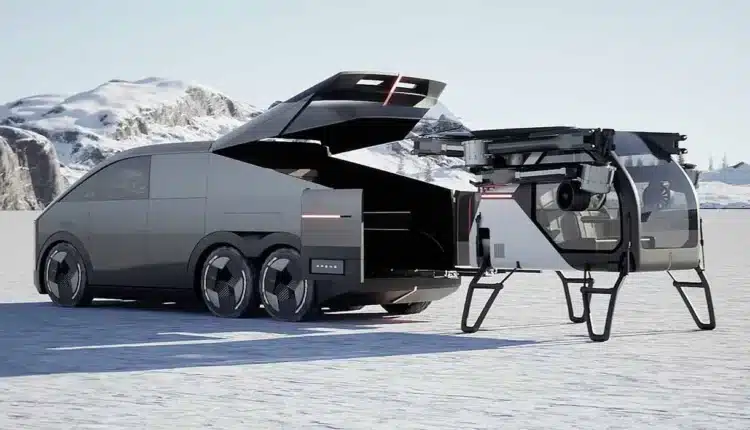
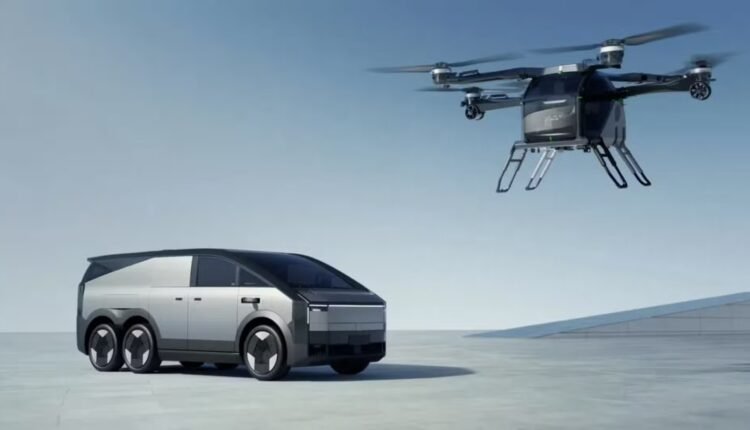
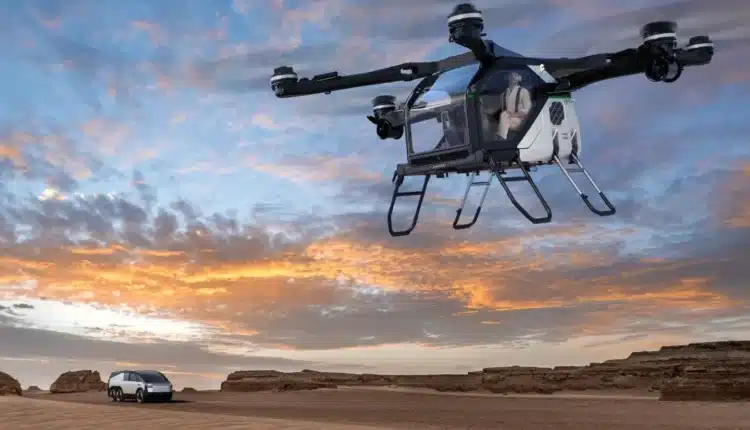
XPENG’s air-mobility subsidiary, now known as Aridge (previously XPENG AeroHT), is developing dual-mode flying vehicles that combine a road-going base with an eVTOL (electric vertical take-off and landing) aircraft module.
Key milestones reported so far include:
- Presentation of the “Land Aircraft Carrier” concept at CES 2025
- Public demonstration flights of an XPENG flying car in Dubai in 2025, including a manned test in cooperation with local authorities
- Plans for mass production around 2026 at a factory in Guangzhou with projected capacity of around 10,000 units per year for certain models
For Pakistan, these flying vehicles remain a long-term topic. Airspace regulation, safety certification, pilot licensing frameworks, and urban planning will all need detailed work before such vehicles can operate regularly over cities like Islamabad, Lahore, or Karachi. Realistically, XPENG EVs on the ground will appear far earlier than any XPENG branded eVTOL aircraft in local skies.

Impact on Daily Travel, Intercity Routes, and Rentals
If XPENG EVs in Pakistan launch with a sensible pricing strategy and adequate support, their influence will extend beyond private ownership. Several segments can gradually feel the change:
- Urban commuting in Islamabad and Rawalpindi: A G6-class EV used for daily office routes and school runs may reduce fuel expenses and noise in residential neighbourhoods.
- Intercity travel between major cities: Once DC chargers along motorways are operational, XPENG sedans and SUVs can handle Islamabad–Lahore, Islamabad–Faisalabad, and Lahore–Karachi journeys with planned charging breaks.
- Airport transfers and executive travel: Premium EV SUVs and sedans can serve as quiet, comfortable options for Karachi airport car rental style operations or high-end airport runs in Islamabad and Lahore.
Over time, rental fleets in cities like Islamabad and Rawalpindi may start adding EVs alongside conventional vehicles. When that happens, local operators offering city-to-city car rental with drivers will evaluate total cost of ownership, charging access, and customer expectations.
For example, when travellers search online for a rent a car in Islamabad with a driver for Islamabad to Lahore trips, brands such as Al Farooq Rent a Car can eventually consider adding XPENG or comparable EVs into specific packages where routes and charging points are predictable. As infrastructure matures, an operator that already focuses on chauffeured, city-to-city car rental can transition selected routes to electric options rather than maintaining a fully petrol- or diesel-only fleet.
Right now, most families booking a rent a car for family travel between Islamabad and northern areas still prefer conventional SUVs due to refuelling convenience. As EV chargers spread along tourism corridors, an XPENG G9-class vehicle could become a practical alternative for those same journeys.
Practical Considerations for Early XPENG EV Users in Pakistan
If and when XPENG vehicles arrive, early adopters in Pakistan will need to plan around a few practical points:
- Home and Workplace Charging
For daily use in cities such as Islamabad, Rawalpindi, and Lahore, home AC charging overnight will likely remain the backbone. Apartment residents may need cooperation from building management to install sockets or wallboxes in parking basements. - Public Charging Compatibility
XPENG’s 800V fast-charging hardware works best with high-power DC chargers. Local charging operators will need to ensure connector standards and supported voltage platforms match XPENG’s systems, similar to how they coordinate with other Chinese EV brands. - Weather, Roads, and Ground Clearance
Karachi’s coastal climate, Lahore’s smog season, Islamabad’s monsoon rains, and rougher patches in peri-urban roads all affect EV usage. Ground clearance on models like the G6 and G9 will matter for speed breakers, while battery-thermal management and sealing matter for heavy rain and temperature swings. - Service Network and Training
Dealership technicians must be trained not just in mechanical repairs, but also in high-voltage safety, software diagnostics, and ADAS calibration. That level of preparation differentiates a successful EV launch from an experimental one.
Information and Policy Disclaimer
Specifications, model names, features, launch timelines, and policy details mentioned in this article are based on publicly available information from XPENG, government notices, and reputable news coverage at the time of writing.
Regulations, EV incentives, electricity tariffs, and XPENG’s own product plans for Pakistan can change without public notice. This blog does not represent official communication from XPENG, any government body, or financial institution, and it should not be treated as legal, financial, or investment advice. Readers who plan to purchase or import an electric vehicle, or make business decisions based on EV infrastructure, should confirm the latest details directly from manufacturers, authorised dealers, and relevant government departments.
Al Farooq Rent a Car and its website content team share this information for general awareness only and cannot be held responsible for policy changes, pricing revisions, or differences between official specifications and individual vehicle configurations.
FAQs
1. When are XPENG EVs expected to launch in Pakistan?
As of now, XPENG has not published an official launch date for Pakistan. Local media reports mention discussions with Pakistani partners, including Tesla Industries, to introduce XPENG EVs in the country, with early focus on SUVs such as the G6. Any firm timeline will depend on commercial agreements, regulatory approvals, and readiness of after-sales support.
2. Which XPENG EV models make the most sense for Pakistani roads?
For Pakistan, the XPENG G6 and G9 are strong candidates because mid-size and full-size SUVs suit local conditions, including speed breakers, mixed road surfaces, and family travel requirements. The P7 sedan could appeal to buyers in cities like Islamabad and Lahore who want a lower, more aerodynamic vehicle with a focus on range and performance. The X9 MPV would mainly target larger families and shuttle services that require three-row seating and generous luggage space.
3. Will XPENG EVs in Pakistan support fast-charging for intercity travel?
XPENG’s newer platforms, including those used by the G6 and G9, are built around 800V DC fast-charging, which allows very quick energy top-ups on compatible chargers. In Pakistan, the usefulness of this feature depends on how rapidly commercial DC fast-charging stations roll out along motorways and in major cities. Once a robust network is in place, XPENG owners will be able to combine home charging with motorway fast-charging stops for trips such as Islamabad–Lahore or Lahore–Faisalabad.
4. How could XPENG electric cars influence rent a car services in Islamabad and Rawalpindi?
Initially, most rent a car in Islamabad and rent a car in Rawalpindi services will continue using conventional vehicles with drivers, because they can refuel easily anywhere. As charging stations grow in number and reliability, operators may begin adding selected XPENG EVs for airport transfers, business travel, and city-to-city car rental between Islamabad, Lahore, and Faisalabad. Companies such as Al Farooq Rent a Car, which already operate chauffeur-driven fleets, can gradually evaluate EVs for routes where charging stops and daily distances are predictable.
5. Are XPENG flying cars coming to Pakistan in the near future?
XPENG’s flying cars, developed by Aridge, are still in early stages of commercialisation, with test flights in markets such as Dubai and plans for mass production around 2026 at facilities in China. For Pakistan, widespread use of such vehicles will require extensive regulatory work on airspace rules, certification, and infrastructure. In practical terms, XPENG EVs on the ground will arrive well before any XPENG-branded flying vehicles become part of daily mobility here.