

Introduction
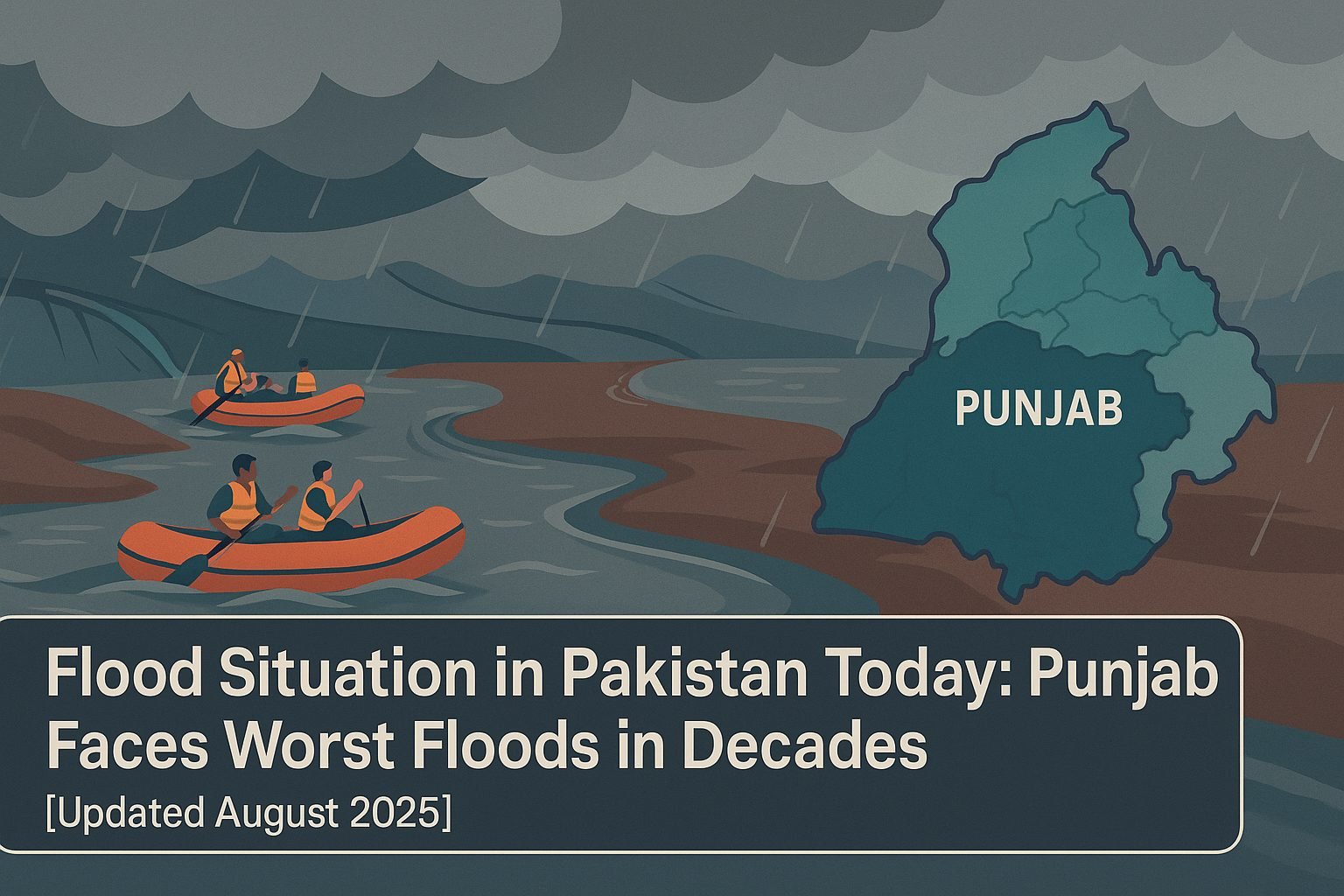
Pakistan is reeling from what officials have called the worst flood in four decades. With rivers Ravi, Sutlej, and Chenab swollen beyond capacity due to monsoon downpours and India’s release of excess dam water, more than 1.46 million people have been affected across Punjab.
The National Disaster Management Authority (NDMA Pakistan), in collaboration with provincial governments, has launched massive relief and evacuation operations. But with over 1,400 villages inundated, thousands of families displaced, airports shut, and crops submerged, the challenges remain staggering.
This article provides a detailed look at the flood situation in Pakistan today, including the latest daily flood report, FFD discharge report today, district-wise impacts, and how authorities are responding to one of the most severe climate disasters in recent memory.
Scale of the Flood Damage
- Affected population: 1.46 million+
- Lives lost: 17 reported
- Villages inundated: 1,692 across Punjab
- People evacuated: 265,000+
- Cattle moved to safety: 154,980
- Relief camps: 355 established across the province
The flooding has not only displaced families but also destroyed grain crops, raising fears of food shortages in the months to come.
Key Updates from NDMA and PDMA
Ravi River Situation
- At Shahdara, Lahore, the Ravi recorded an exceptionally high flood with 219,770 cusecs water outflow.
- Head Balloki near Pattoki was also under high flood at 114,110 cusecs, with a rising trend.
- In Narowal, 75 villages were submerged, affecting around 11,000 people.
Sutlej River Update
- Kasur (Ganda Singh Wala): Exceptionally high flood at 261,053 cusecs.
- Sulemanki (Bahawalnagar): Medium flood at 113,124 cusecs.
- Head Islam: Low flood at 52,706 cusecs.
- In total, 361 villages were submerged, displacing 127,000 people and 70,000 animals.
Chenab River Flood Update Today Live
- Head Marala (Sialkot): 106,496 cusecs (low flood, falling).
- Khanki and Qadirabad: 305,436 cusecs each.
- Head Trimmu near Jhang: Rising trend at 117,534 cusecs; expected to reach 700,000–800,000 cusecs in the next 48 hours, which could cause widespread devastation.
- Head Sidhnai (Abdul Hakeem): Rising, with inflow at 25,443 cusecs.
Indus River
- Tarbela Dam: Normal flow, with outflow at 155,400 cusecs.
District-Wise Impact
- Chenab River: 991 villages submerged across Jhang, Multan, Hafizabad, Mandi Bahauddin, Sargodha, Khanewal, and Muzaffargarh.
- Ravi River: 80 villages hit, including in Narowal, Sheikhupura, and Nankana Sahib.
- Sutlej River: 361 villages affected in Kasur, Okara, Pakpattan, Multan, Vehari, Bahawalnagar, and Bahawalpur.
- Sialkot: Airport services suspended for 24 hours due to floodwater, with operations halted for safety.
Relief and Evacuation Operations
The Punjab government, backed by NDMA and PDMA, is running one of its largest disaster management efforts in decades:
- 265,000+ people evacuated to safer areas.
- 6,656 individuals provided medical care.
- 72 veterinary camps established in Chenab-affected districts.
- 90 veterinary camps in Sutlej belt to protect livestock.
- Tents, food, and medical supplies distributed across relief camps.
Prime Minister Shehbaz Sharif and Chief Minister Maryam Nawaz Sharif personally oversaw operations, conducting aerial surveys of flood-hit districts and coordinating with NDMA officials.
International Support
Turkey’s President Recep Tayyip Erdoğan called PM Shehbaz to express solidarity, offering assistance in rescue and relief. This gesture reflects Pakistan’s long-standing diplomatic and humanitarian ties with Turkey.
No Compensation for High-Risk Illegal Structures
Punjab’s Information Minister Attaullah Tarar clarified that while relief is being provided to displaced families, no compensation will be paid for houses built illegally in high-risk flood zones. This stance aims to discourage unsafe construction practices that worsen flood vulnerabilities.
Economic Impacts
Crops submerged: Thousands of acres of grain crops washed away, endangering food supplies.
- Livestock losses: Surveys underway to assess damages.
- Transport disruption: Closure of Sialkot airport highlights risks to trade and travel.
In cities like Islamabad and Rawalpindi, supply chain disruptions are likely to push up food prices and affect intercity transport as floodwaters strain road and rail routes.
Disaster Management in Pakistan – Strengths and Gaps
This flood has highlighted both progress and challenges in disaster management in Pakistan.
Strengths:
- NDMA’s early warning systems gave time for evacuations.
- PDMA’s relief camps and medical facilities were quickly activated.
- Coordination between federal and provincial governments has been strong.
Gaps:
- Infrastructure, such as embankments and drainage systems, remains weak.
- Many communities continue to settle in high-risk floodplains, despite repeated disasters.
- Compensation mechanisms are limited and slow.
For long-term resilience, Pakistan must invest more in climate adaptation, modern flood forecasting, and safe housing policies.
Flood Situation in Pakistan in Urdu (سیلاب کی تازہ صورتحال)
پاکستان میں حالیہ بارشوں اور بھارت کی ڈیموں سے اضافی پانی چھوڑنے کی وجہ سے دریائے راوی، ستلج اور چناب میں خطرناک حد تک پانی بھر گیا ہے۔ اب تک 17 افراد جاں بحق اور 14 لاکھ سے زائد افراد متاثر ہو چکے ہیں۔ حکومت پنجاب اور این ڈی ایم اے بڑے پیمانے پر امدادی کارروائیاں کر رہے ہیں تاکہ متاثرین کو محفوظ مقامات پر منتقل کیا جا سکے۔
Practical Alternatives for Citizens: Renting a Car
During crises like these, mobility becomes one of the biggest challenges. With major highways blocked and fuel prices high, families often struggle with safe and affordable transport. This is where rent a car services play a crucial role.
Why Al Farooq Rent a Car?
- Rent a car in Islamabad and Rawalpindi for safe, dependable travel.
- Affordable rent a car Islamabad rates, suitable for both families and professionals.
- Islamabad to Lahore rent a car and Islamabad to Faisalabad rent a car options for intercity travel when trains and buses are disrupted.
- Rent a car with driver for added safety during uncertain road conditions.
- Airport rentals at Islamabad, Lahore, and Karachi for convenient pickups.
- Flexible vehicles, from small cars for families to SUVs for flood-affected rural roads.
With so much uncertainty, renting is often safer and more cost-effective than owning or driving a personal vehicle during emergencies.
Conclusion
The flood situation in Pakistan today is dire, with Punjab facing its worst floods in decades. Over 1.5 million people have been affected, thousands of villages submerged, and critical infrastructure disrupted. Relief efforts by NDMA Pakistan, PDMA, and the Punjab government are ongoing, but challenges remain immense.
As Pakistan battles this crisis, families in Islamabad, Rawalpindi, and Lahore must prepare for both immediate and long-term adjustments. For daily mobility and safe intercity travel, Al Farooq Rent a Car provides a practical solution, ensuring comfort and reliability even in difficult times.