

Quick Answer
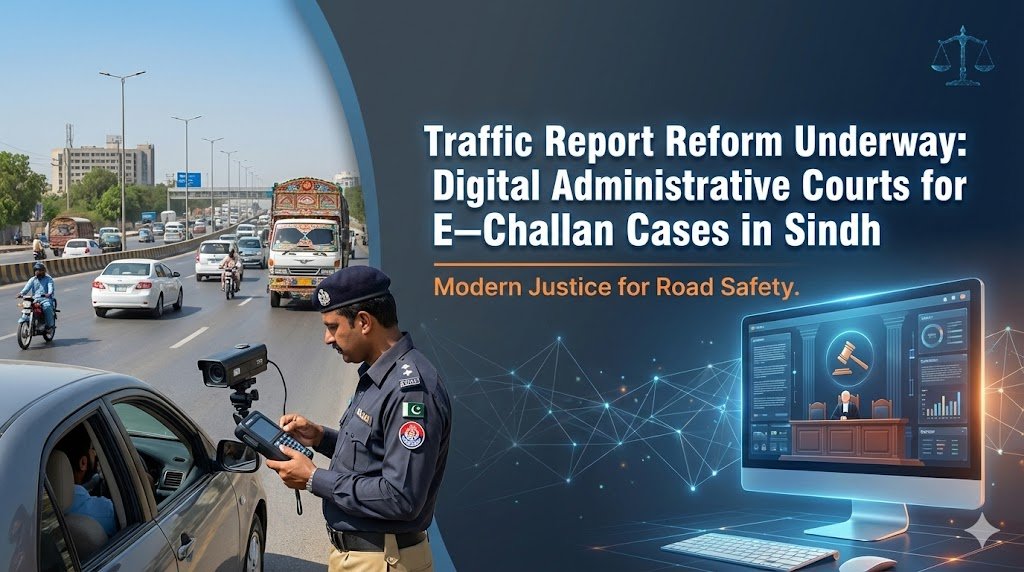
Sindh is moving toward a digital administrative court system for traffic violations, where fine offenses linked to e-challans will be heard and resolved electronically instead of through traditional physical courts.
- Scope: Traffic fine offenses and e-challan disputes
- Location: Sindh province (including Karachi)
- Objective: Faster disposal of pending traffic challan cases
- Format: Dedicated traffic courts with digital processing
- Impact: Reduced backlog, transparent hearing process, quicker case resolution
- Status: Reform underway; official notifications expected
- Update note: Policy developments verified from government reporting as of February 2026
- Disclaimer: Implementation timelines and procedural rules may evolve after formal SRO issuance
This reform is expected to streamline traffic fine handling, reduce court congestion, and modernize enforcement under a digital framework.
Introduction
The traffic report reform in Sindh introducing digital administrative courts for e-challan cases represents a structural shift in how traffic violations are handled in Pakistan. Instead of routing fine-related offenses through conventional magistrate courts, authorities are preparing a specialized digital system to hear and dispose of traffic fine cases efficiently.
For cities like Karachi, where traffic congestion and violation volume remain high, the move aims to ensure that traffic enforcement is both accountable and time-efficient. The reform also signals a broader digital transition within Pakistan’s administrative and judicial processes.
Why Sindh Is Moving Toward Digital Traffic Courts
Rising Volume of E-Challans
With the expansion of camera-based enforcement systems in major cities, the number of electronically issued challans has increased significantly. Speed violations, signal jumps, and lane breaches are now recorded digitally, creating thousands of pending fine cases.
Traditional court handling of minor traffic offenses has proven time-consuming. This has led to delays in case resolution and inconsistent enforcement.
Need for Specialized Disposal Mechanism
Minor traffic fine disputes often require simple verification rather than full judicial trials. Digital administrative courts are structured to:
- Review violation footage
- Validate identity and vehicle ownership
- Confirm fine applicability
- Issue binding administrative decisions
This reduces unnecessary procedural delays.
How the Digital Administrative Court System Will Work
Core Features
- Online Case Registration:
E-challan recipients will be able to challenge fines digitally. - Electronic Evidence Review:
Camera footage and violation records will be evaluated through a digital interface. - Administrative Hearing Model:
Instead of lengthy court proceedings, cases will follow simplified administrative protocols. - Time-Bound Disposal:
Cases are expected to be resolved within defined timeframes.
Digital vs Traditional Court Process
| Factor | Traditional Court | Digital Administrative Court |
|---|---|---|
| Filing method | Physical appearance | Online submission |
| Hearing timeline | Often extended | Time-bound |
| Evidence review | Manual | Digital footage verification |
| Court backlog | High | Reduced |
| Case type | Mixed categories | Traffic-specific only |
This structural shift is designed to isolate minor traffic matters from broader criminal case queues.
What This Means for Drivers in Sindh
Faster Case Resolution
Drivers contesting an e-challan will not need repeated physical appearances. The digital framework reduces administrative burden and travel time.
Greater Transparency
Since violations are camera-based, digital courts allow both authorities and drivers to review the same visual evidence. This improves fairness in fine adjudication.
Increased Enforcement Consistency
A centralized system reduces discretionary variations in enforcement decisions.
Financial Implications for Motorists
Although the reform does not directly change fine amounts, it influences how quickly penalties are confirmed and enforced.
Potential Effects
- Reduced delay in fine recovery
- Clearer deadlines for payment
- Digital tracking of violation history
Failure to respond to e-challan notices within the digital system could lead to additional penalties or vehicle record flags.
Administrative Efficiency & Government Objectives
The reform aligns with broader digitization efforts within provincial governance.
Expected Benefits
- Reduced burden on civil courts
- Faster revenue realization from fines
- Improved traffic discipline through quicker enforcement
- Better data management for law enforcement
The Sindh government has been expanding e-policing infrastructure in recent years, particularly in Karachi’s metropolitan zones.
For official updates on policy implementation and traffic regulations, readers can refer to the Government of Sindh official portal, which publishes public notifications and regulatory updates.
Comparison With Other Provinces
Other provinces in Pakistan have introduced camera-based enforcement systems, but the establishment of dedicated digital administrative traffic courts marks a more structured judicial adaptation.
Potential Future Expansion
If successful, similar frameworks could be adopted in:
- Punjab
- Islamabad Capital Territory
- Khyber Pakhtunkhwa
Such reforms would standardize traffic fine handling nationwide.
Practical Guidance for Drivers
If You Receive an E-Challan
- Verify vehicle registration details.
- Review digital evidence if available.
- File objection within prescribed timeline.
- Track hearing status online once the system is operational.
When Contesting a Fine
- Ensure vehicle was not sold but untransferred.
- Confirm license plate clarity in footage.
- Verify date and time of violation.
Digital administrative courts will likely require documentary proof for disputes.
Who This Reform Benefits Most
Suitable For
- Urban drivers frequently exposed to camera enforcement
- Individuals who travel regularly within Karachi
- Fleet operators managing multiple vehicles
Less Impacted
- Rural drivers with limited camera coverage
- Drivers rarely entering monitored corridors
Impact on Vehicle Ownership & Mobility
While the reform concerns fine processing rather than mobility services, administrative clarity improves overall vehicle compliance.
For individuals managing travel needs across Islamabad and Rawalpindi while handling administrative obligations, reviewing flexible options such as rent a car in Islamabad through Al Farooq Rent a Car can provide uninterrupted mobility during documentation or compliance processes.
Additionally, those visiting Sindh from other provinces can consult the official Al Farooq Rent a Car homepage for intercity travel arrangements if needed.
Implementation Timeline & Legal Framework
The reform is expected to be formalized through official notification (SRO) under provincial administrative authority.
Key steps include:
- Issuance of legal notification
- Establishment of dedicated digital traffic benches
- Deployment of digital case management platform
- Public awareness campaign
Precise operational timelines depend on administrative approval and system readiness.
Common Mistakes Drivers Should Avoid
- Ignoring digital challan notifications
- Delaying payment beyond allowed period
- Assuming physical court appearance is mandatory
- Transferring vehicles without updating registration records
Administrative courts are designed for efficiency; delays in response may reduce flexibility in appeal options.
FAQs
What is a digital administrative court for traffic cases?
A digital administrative court is a specialized system designed to hear traffic fine disputes electronically. It focuses on reviewing e-challan evidence and issuing administrative decisions without traditional courtroom procedures.
Will traffic fine amounts change under the new system?
No changes to fine amounts have been announced. The reform focuses on faster case disposal and digital hearing processes rather than penalty revision.
How can drivers contest an e-challan in Sindh?
Drivers will be able to submit objections through an online portal once the digital court framework is fully operational.
What happens if I ignore an e-challan notice?
Ignoring an e-challan may result in additional penalties, administrative restrictions, or vehicle record flags, depending on enforcement policies.
Does this system apply outside Sindh?
Currently, the reform applies to Sindh. Other provinces may adopt similar models in the future.
Is physical court appearance still required?
The objective of the reform is to reduce physical appearances for minor traffic fine cases. Final procedural rules will confirm exact requirements.
Disclaimer
The information provided in this article is based on publicly reported government policy developments as of February 2026. Regulatory details, enforcement procedures, and implementation timelines may change upon official notification. Readers are advised to verify updates through official government channels before making legal or compliance decisions. This content is published for informational purposes only and does not constitute legal advice.