
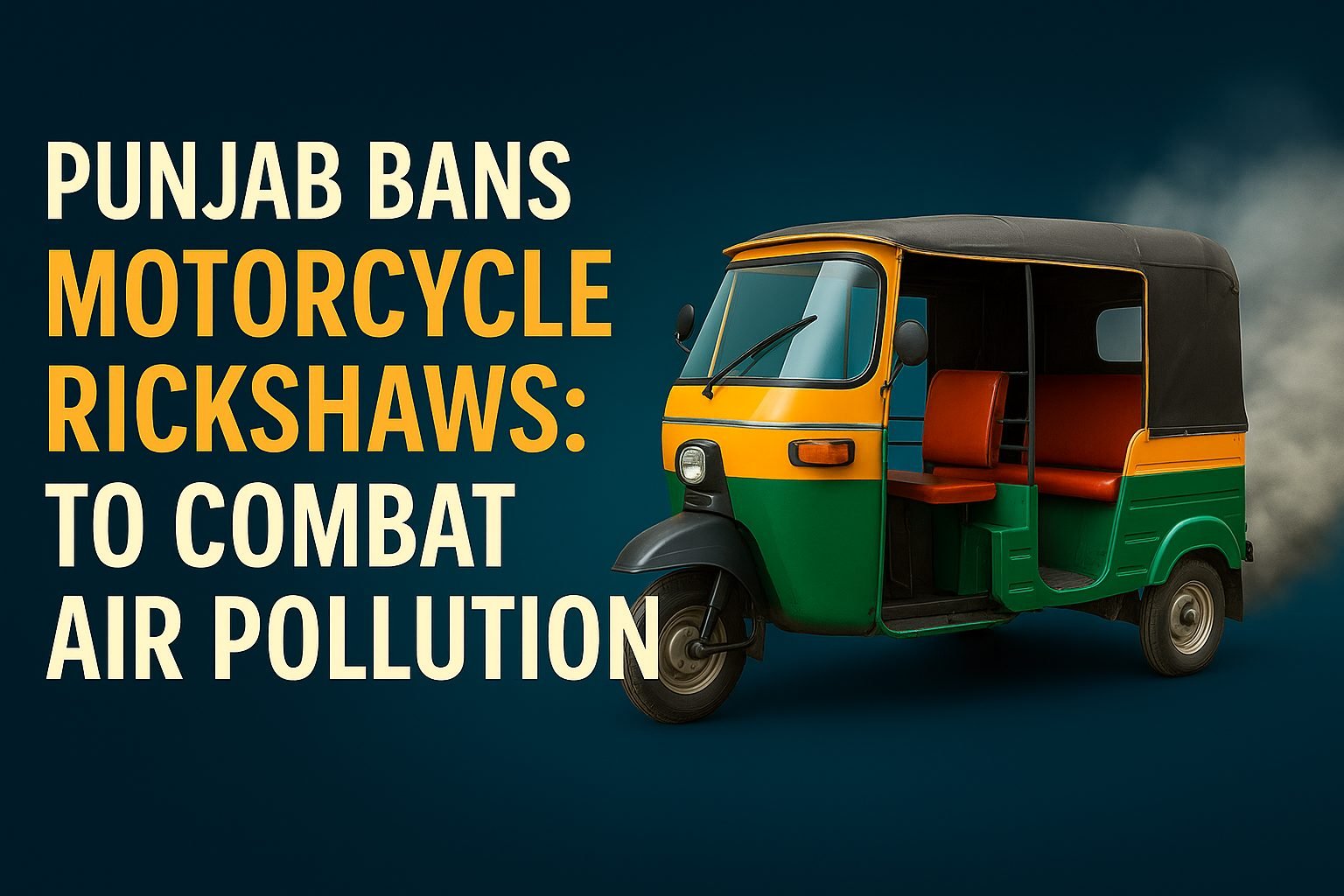
The Punjab government has approved a province-wide ban on the production of motorcycle rickshaws (commonly known as Qingqi rickshaws) as part of a wider effort to curb air pollution and reduce smog levels. The decision was finalized during a special meeting of the Cabinet Committee on Anti-Smog on 27 November, presided over by Punjab Chief Minister Maryam Nawaz.
This marks one of the most aggressive anti-pollution measures introduced by any province in recent years, reflecting the severity of the air quality crisis, particularly in Lahore, Faisalabad, Gujranwala, and other major cities where seasonal AQI readings frequently exceed 200+, entering the hazardous range.
Government Approves Full Ban on Motorcycle Rickshaw Production
During the meeting, the Chief Minister approved a complete prohibition on the manufacturing of motorcycle rickshaws across Punjab. This move aims to gradually phase out high-emission, poorly regulated three-wheelers from urban traffic, replacing them with cleaner and safer alternatives over time.
The Chief Minister also directed that all government departments must immediately shift to electric or hybrid vehicles, including electric motorbikes. Under this directive:
- No new government purchase of petrol or diesel vehicles is allowed
- The only exception is the acquisition of hybrid electric vehicles (HEVs)
- Departments must begin transitioning existing fleets toward cleaner mobility
This aligns with broader provincial goals to shift toward greener transportation and reduce annual smog peaks.
Smog Levels and the Urgency for Reform
Punjab continues to struggle with critically high pollution levels every winter due to:
- Vehicle emissions
- Crop-burning practices
- Industrial smoke
- Dust from construction
- Seasonal weather patterns that trap pollutants
Cities such as Lahore frequently reach AQI levels well above 200, triggering health advisories, school closures, and public warnings. With yearly smog intensifying, the government argues that aggressive interventions have become necessary.
Why Motorcycle Rickshaws Were Targeted
Despite the broader pollution problem, the decision to ban only motorcycle rickshaws has raised questions. Motorcycle rickshaws are small, low-cost three-wheelers powered by 100cc motorcycle engines, typically used for short-distance transport.
Concerns and Questions Surrounding the Ban
While the intention to reduce emissions is clear, many industry observers and citizens are questioning the rationale:
- Motorcycle rickshaws are not the only high-pollution vehicles on the roads
- Millions of motorcycles, cars, buses, and trucks contribute more significantly to emissions
- The number of 70cc and 125cc motorcycles far exceeds the number of Qingqi rickshaws
- Yet, the production of motorcycles remains unrestricted
- No immediate plan has been announced regarding affordable replacements for low-income operators
For many families, motorcycle rickshaws serve as an essential means of livelihood. A sudden ban on production could impact thousands of households if not accompanied by support measures or transition plans.
What the Government Aims to Achieve
The Punjab government’s broader environmental roadmap includes:
- Reducing PM2.5 particulate levels
- Standardizing vehicle emissions
- Increasing the share of EVs in the province
- Improving long-term air quality across Punjab’s major cities
- Strengthening enforcement through EPA Punjab and Safe City data integration
The government argues that motorcycle rickshaws have outdated structures, inefficient engines, and poor emissions control, making them unsuitable for a cleaner Punjab.
However, experts suggest that a more balanced policy could include:
- Emission testing for all vehicles
- Incentives to convert rickshaws to electric powertrains
- Subsidies for low-income transport providers
- A phased transition rather than an immediate ban
Impact on Transport Operators and Urban Mobility
Motorcycle rickshaws are widely used in:
- Lahore
- Multan
- Rawalpindi
- Faisalabad
- Urban and peri-urban areas
They serve as an accessible mode of transport, particularly for last-mile connectivity. A sudden halt in production may:
- Increase reliance on motorcycles, which still emit pollutants
- Put economic pressure on rickshaw owners
- Reduce affordable public transport options
- Create gaps in short-route mobility
If the government expects a smooth transition, it must clarify:
- Whether existing rickshaws will eventually be phased out
- If electric rickshaws will be provided or subsidized
- Whether financing options will be available for operators
Coordination With EPA Punjab and Enforcement Authorities
According to government officials, the enforcement mechanism will work alongside the Environmental Protection Agency (EPA) and the Safe City Authority. Data cross-checking between number plates, vehicle types, and emissions compliance will allow authorities to detect non-compliant vehicles quickly.
EPA Punjab has already intensified action across major cities, issuing thousands of challans for smoke-emitting vehicles. The ban on producing motorcycle rickshaws is expected to complement these enforcement measures.
Broader Trends in Pakistan’s Mobility Transition
While Pakistan remains heavily reliant on combustion engines, the momentum toward cleaner transportation is growing nationwide:
- Provinces increasingly restrict emissions-heavy vehicles
- EV scooters and small electric vehicles are entering the market
- Ride-hailing companies are testing electric fleets
- The federal government is pushing hybrid adoption through tax incentives
The ban shows Punjab’s willingness to adopt more assertive policies faster than other provinces.
Transport Options for Daily Travel in Rawalpindi & Islamabad
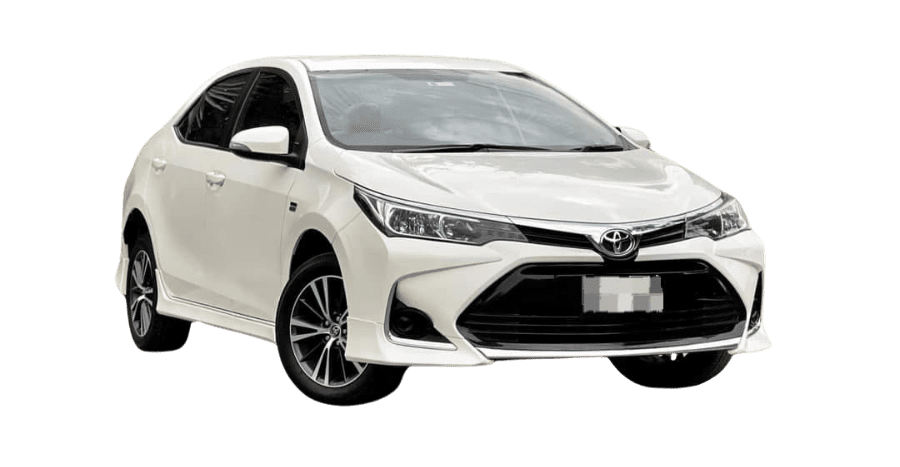
For residents moving between Rawalpindi and Islamabad—especially those avoiding congested or high-smog routes—driver-operated rentals remain a practical alternative.
A reliable option for safe, disciplined, point-to-point travel is available here:
https://alfarooqrentacar.com/rent-a-car-islamabad/
It offers structured routes, Islamabad airport transfers, and citywide mobility while Punjab’s transport regulations continue to evolve.
External Authoritative Source
Official Government of Punjab environmental updates:
https://epd.punjab.gov.pk/
FAQs
Why has Punjab banned motorcycle rickshaws?
The ban is part of the province’s anti-smog measures, aiming to reduce emissions by restricting the production of older, high-pollution vehicle types.
Are motorcycles also banned?
No. While motorcycle emissions contribute significantly to pollution, the government has targeted only motorcycle rickshaws for the production ban.
Will existing motorcycle rickshaws be phased out?
The government has not issued any guidance on phasing out existing units, but future policies may address operational restrictions.
What alternatives will be provided to rickshaw owners?
No official replacement or subsidy scheme has been announced yet, which raises concerns among transport workers.
Will the government purchase only electric vehicles going forward?
Yes. All Punjab government departments are now required to buy electric or hybrid vehicles only.