
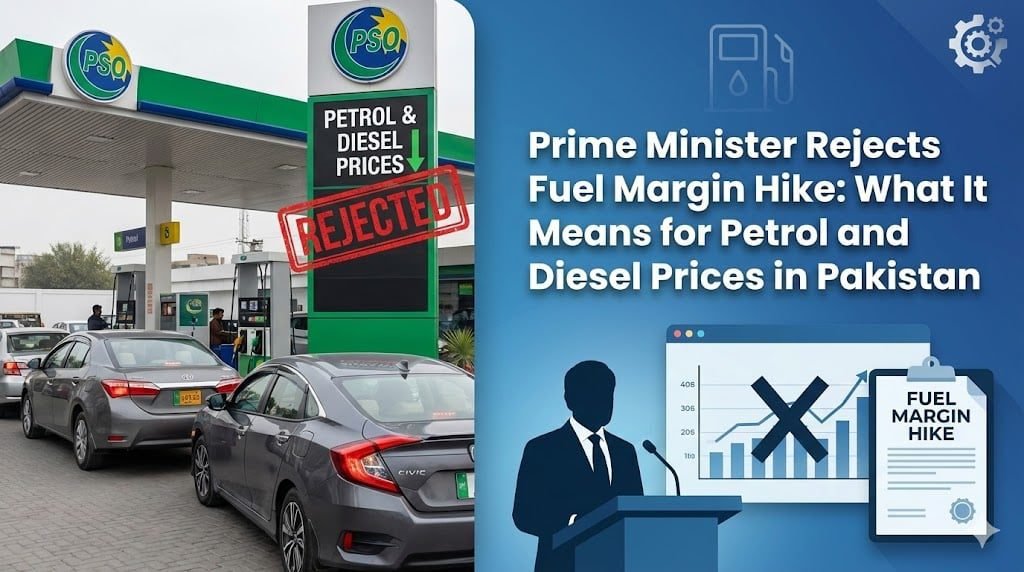
The decision by the federal government to block a proposed increase in fuel margins has drawn significant public attention. With inflation already placing pressure on household budgets, the announcement that the Prime Minister rejects fuel margin hike has immediate implications for petrol and diesel prices across Pakistan. This move directly affects transport costs, inflation trends, and daily commuting expenses, especially in major urban centers such as Islamabad and Rawalpindi.
Fuel pricing in Pakistan is not determined by global oil rates alone. It is shaped by a layered structure that includes ex-refinery prices, government taxes, levies, and margins paid to oil marketing companies (OMCs) and fuel dealers. When margins increase, consumers feel the impact instantly at the pump. By refusing to approve the hike, the government has chosen to temporarily shield consumers from an additional price burden.
This article explains what fuel margins are, why the proposed hike mattered, and how the Prime Minister’s decision affects consumers, transport operators, and the broader economy.
Understanding Fuel Margins in Pakistan’s Pricing System
Fuel margins are fixed amounts paid to oil marketing companies and petrol pump dealers for distribution and retail services. These margins are separate from government taxes and petroleum levies.
In Pakistan, petrol and diesel prices typically include:
- Ex-refinery price linked to international oil markets
- Inland freight equalization margin
- OMC margin
- Dealer margin
- Government taxes and levies
While margins appear small per liter, even a minor increase translates into billions of rupees annually when applied nationwide.
Why a Fuel Margin Hike Was Proposed
Oil marketing companies and fuel dealers periodically request margin revisions to offset rising operational costs. These costs include:
- Transportation and logistics expenses
- Utility bills and wages
- Infrastructure maintenance
- Currency depreciation impact on imported components
Industry representatives argued that existing margins had not kept pace with inflation, making operations financially challenging, particularly for smaller fuel retailers.
Prime Minister’s Decision and Official Position
The federal cabinet reviewed the proposal and ultimately rejected the margin hike. The Prime Minister emphasized that any increase in fuel prices would worsen inflationary pressure and disproportionately affect low- and middle-income households.
This decision aligns with the government’s broader effort to stabilize prices during a period of economic adjustment and fiscal consolidation. By holding margins steady, authorities aim to prevent a ripple effect across transport fares and commodity prices.
Immediate Impact on Petrol and Diesel Prices
The most direct outcome of rejecting the margin hike is price stability at fuel stations.
For consumers, this means:
- No immediate increase in per-liter petrol and diesel prices
- Predictable transport costs in the short term
- Reduced pressure on public and private transport fares
In cities like Islamabad and Rawalpindi, where daily commuting distances are significant, even a small fuel price rise can substantially increase monthly expenses.
Effect on Inflation and Cost of Living
Fuel prices influence inflation beyond transportation alone. They affect:
- Food distribution costs
- Public transport fares
- Ride-hailing services
- Logistics for retail and manufacturing
By preventing a margin-driven fuel price increase, the government has limited one potential driver of inflation. This move is particularly relevant at a time when consumers are already managing higher electricity tariffs and essential commodity prices.
Reaction from Oil Marketing Companies and Dealers
While consumers welcomed the decision, fuel retailers expressed concern over profitability.
Key industry concerns include:
- Margins not adjusted in line with inflation
- Rising compliance and regulatory costs
- Reduced incentive for infrastructure upgrades
OMCs argue that prolonged margin freezes may discourage investment in storage facilities and safety improvements. However, the government maintains that consumer protection must take priority during economic stabilization.
Broader Economic Context
Pakistan’s fuel pricing policy is closely monitored by international lenders and financial institutions. Any decision affecting petroleum revenues and consumer prices carries fiscal implications.
The margin rejection signals:
- A short-term consumer relief strategy
- Continued reliance on petroleum levies for revenue
- Careful balancing between industry viability and public affordability
Fuel pricing remains a politically sensitive issue, particularly in urban constituencies.
Urban Mobility and Transport Costs
In metropolitan areas, fuel costs directly influence daily mobility patterns. Many households rely on private vehicles for work, education, and family responsibilities.
When fuel prices remain stable:
- Monthly commuting expenses remain predictable
- Transport operators avoid sudden fare increases
- Intercity travel planning becomes easier
For individuals who prefer not to absorb fuel cost volatility, structured mobility options such as professional car services offer predictable pricing. In cities like Islamabad, travelers often use services such as Al Farooq Rent a Car for scheduled travel, airport transfers, and family transport without worrying about daily fuel price fluctuations.
Impact on Intercity and Commercial Transport
Diesel prices are particularly important for freight and intercity transport.
A margin hike would have:
- Increased freight charges
- Raised retail prices of essential goods
- Pressured supply chains
By rejecting the hike, the government has temporarily eased cost pressures for logistics operators and small businesses dependent on road transport.
Government’s Pricing Authority and Regulatory Oversight
Fuel pricing decisions involve multiple institutions, including the Ministry of Finance and the Oil and Gas Regulatory Authority. OGRA reviews cost structures and submits recommendations, but final approval rests with the federal government.
Official updates on petroleum pricing frameworks and regulatory decisions are published through government channels such as the Oil and Gas Regulatory Authority of Pakistan, which oversees sector transparency and compliance.
Will Fuel Margins Increase in the Future?
The rejection does not permanently eliminate the possibility of a margin revision. It only postpones the adjustment.
Future changes will depend on:
- Inflation trends
- Fiscal space
- Industry sustainability
- Political considerations
Any revision is likely to be gradual to avoid sudden shocks to consumers.
Consumer Outlook and Practical Considerations
For now, consumers benefit from price stability, but fuel prices in Pakistan remain vulnerable to:
- International oil market movements
- Exchange rate fluctuations
- Tax and levy adjustments
Households are advised to plan transport expenses conservatively and remain aware of official price notifications issued fortnightly.
FAQs
What does it mean when the Prime Minister rejects a fuel margin hike?
It means the government has refused to increase the fixed margins paid to fuel companies and dealers, preventing an immediate rise in fuel prices.
Will petrol and diesel prices go down after this decision?
No. Prices remain unchanged. The decision only stops an increase related to margins.
Who benefits most from this decision?
Consumers, transport operators, and businesses that rely heavily on road transport benefit from price stability.
Can fuel margins be increased later?
Yes. The government may review margins again depending on economic conditions and industry requirements.
Does this decision affect fuel taxes?
No. Taxes and petroleum levies are separate components and were not changed by this decision.
Disclaimer
This article is provided for general informational purposes only. Fuel pricing, margins, and government policies are subject to change based on regulatory decisions and economic conditions. Readers are advised to verify current fuel prices and official notifications through government sources before making financial or travel-related decisions.