

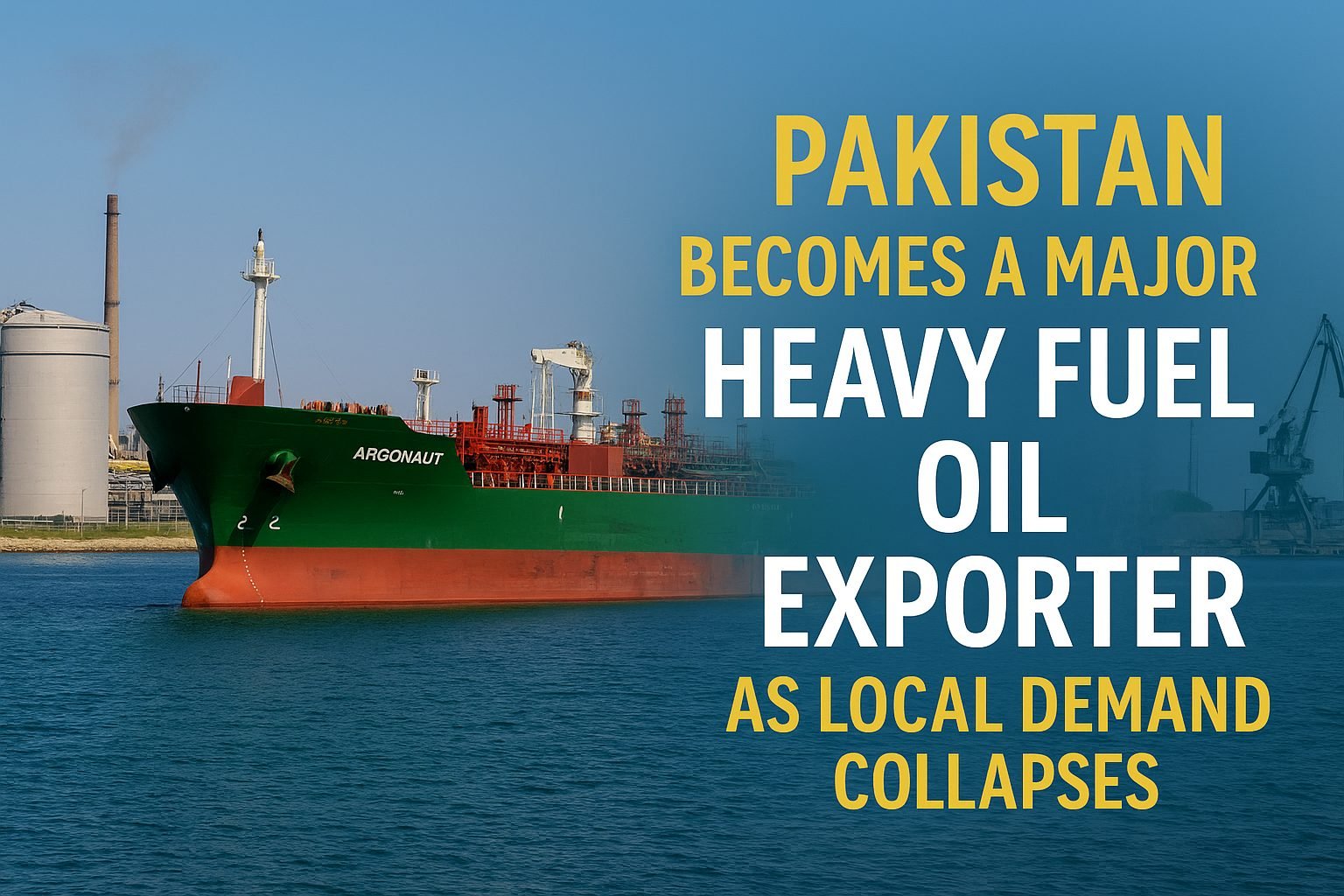
Pakistan heavy fuel oil exports have reached the highest levels ever recorded, marking a major shift in the country’s energy and refinery economics. According to Reuters, Pakistan’s exports of furnace oil surged in 2025 due to two critical drivers: a collapse in local demand and higher taxes discouraging domestic consumption.
In previous years, Pakistan relied heavily on imported furnace oil for power generation. However, since late 2023, the trend reversed sharply, turning Pakistan from a net importer to a net exporter of heavy fuel oil.
This blog breaks down the full picture — export volumes, refinery pressure, market impact, and what it means for Pakistan’s energy mix going into 2026.
What Is Heavy Fuel Oil and Why Is It Surging in Exports?
Heavy Fuel Oil (HFO) is the thick, black residual product left after refining crude oil into petrol, diesel, and jet fuel. Traditionally, it is used in:
- Large power plants
- Industrial boilers
- Marine shipping (bunkers)
But Pakistan’s energy landscape has changed. As power companies shifted to LNG, coal, and solar, domestic fuel oil consumption collapsed. Refiners are now exporting their entire HFO output to avoid storage buildup.
Record Export Figures: Pakistan Ships Over 1.4 Million Tons in 2025
Data from Kpler shows:
| Year | Export Volume |
|---|---|
| 2024 | 1.21 million tons |
| 2025 | 1.4+ million tons (16% increase) |
LSEG confirmed similar figures, reporting 1.33 million tons exported so far — compared to 1.11 million tons last year.
These volumes are so large that they are merging into an already oversupplied Asian HFO market, putting added pressure on global prices.
Most exports consist of high-sulphur fuel oil, shipped to:
- Southeast Asia
- Middle East
- Singapore bunkering hubs
Main uses include shipping fuel and refinery feedstock.
Why Local Demand Collapsed: The Real Reasons
Pakistan’s domestic consumption fell sharply due to:
1. Higher Taxes on Local Furnace Oil Sales
Government-imposed duties made furnace oil too expensive for local power producers.
2. Power Plants Switching Fuels
Production has shifted from HFO to:
- Coal
- Solar
- Natural gas
- RLNG
3. Refinery Overproduction
Refineries must keep processing crude, even if local fuel oil demand is zero.
This results in unavoidable HFO production that must be exported.
4. Grid Modernization & Efficiency Push
More efficient turbines require cleaner fuels, making HFO less relevant.
Which Refineries Are Exporting the Most?
Pakistan’s major energy companies leading the export shift include:
- Pak-Arab Refinery (PARCO)
- Cnergyico
- Attock Refinery
- Pakistan Refinery
- National Refinery
According to the Oil Companies Advisory Council’s Secretary General, Syed Nazir Abbas Zaidi, furnace oil exports will grow even more in 2026.
From Importer to Exporter: A Massive Market Shift
Before 2023, Pakistan imported furnace oil during peak power demand seasons.
Today, because:
- power plants barely use HFO,
- refineries produce surplus volumes,
- exports became profitable,
Pakistan is a net exporter.
This is one of the biggest structural changes in Pakistan’s energy sector in more than 20 years.
Impact on Global Markets
Pakistan’s rising exports add pressure in Asia’s HFO market, especially in:
- Singapore bunker market
- Malaysia
- Thailand
- UAE
- Oman
Extra supply lowers margins for regional refineries and improves availability for shipping companies.
How This Affects Pakistan’s Energy Future
Positive Outcomes
- Reduced dependence on expensive fuel oil
- Cleaner, more efficient power generation
- More export revenue for refineries
- Lower import bills
Challenges
- Local refineries struggle with margins
- Increased reliance on imported LNG and coal
- Need to modernize local refining technology
The government is currently reviewing a refinery policy to support upgrades.
Authoritative Source
Primary data, market statistics, and refinery insights referenced from: Reuters Global Commodities Desk
For intercity travel in Islamabad and Rawalpindi, secure and chauffeured transport options are available through Al Farooq Rent A Car.
FAQs
1. Why is Pakistan exporting so much heavy fuel oil now?
Because domestic consumption collapsed due to cost, taxes, and the shift to LNG, coal, and renewables.
2. Which countries buy Pakistan’s furnace oil?
Mainly Southeast Asian and Middle Eastern markets for bunker fuel and refinery feedstock.
3. Is Pakistan still using furnace oil for power plants?
Minimal. Only during emergency shortages.
4. Will exports rise further in 2026?
Yes — according to industry officials, exports are expected to grow due to surplus production.
5. How does this impact the energy sector?
It accelerates Pakistan’s transition away from old furnace-oil based power plants.