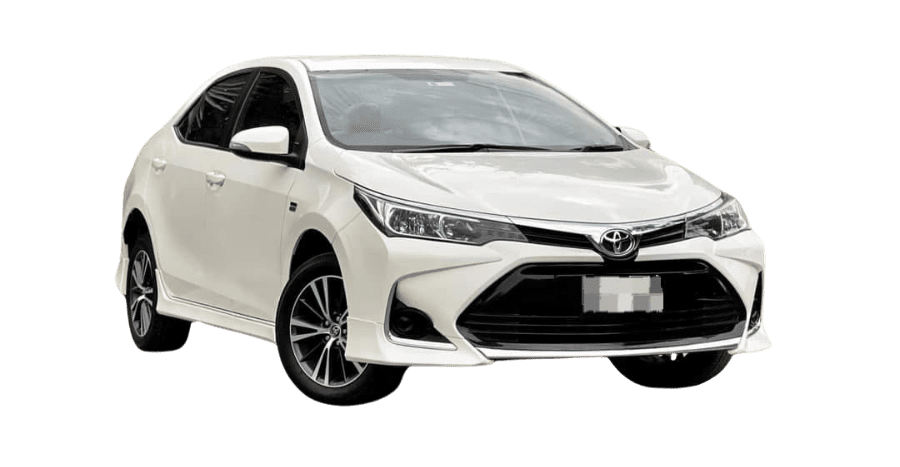


The perception that vehicles in Pakistan carry inflated price tags compared to international markets has become a widely accepted narrative. However, comprehensive price data reveals a completely different reality that challenges this common assumption.
When examining factory prices before taxation, Pakistan's locally assembled vehicles demonstrate remarkable competitiveness against comparable models in Southeast Asian markets. This analysis examines actual pricing data across multiple countries to understand where Pakistan truly stands in the regional automotive landscape.
Breaking Down the Numbers: Pakistan vs Regional Markets
Recent comparative data from Pakistan Automotive Manufacturers Association (PAMA) representatives provides detailed insights into how Pakistani vehicle prices stack up against Thailand, Indonesia, and India when adjusted for taxes and exchange rates.
Toyota Corolla 1.8 CVT Automatic Transmission
The flagship sedan shows compelling price differentials across markets. In Pakistan, the factory price including 25% VAT stands at PKR 7,029,000. When taxes are removed and converted to US dollars at the exchange rate of PKR 285 per dollar, the net price comes to $18,497.
Compare this with Indonesia, where the same variant costs IDR 583,300,000 with 12% VAT. After tax adjustment and currency conversion at IDR 16,400 per dollar, the price reaches $31,299. Thailand's pricing follows a similar pattern at THB 979,000 including 7% VAT, translating to $28,014 after adjustments.
The data reveals Pakistan's Corolla 1.8 CVT costs nearly $13,000 less than the Indonesian version and approximately $10,000 less than the Thai model before local taxes apply.
Mid-Range Sedan Segment Analysis
The Toyota Corolla and Vios variants in the 1.5 to 1.6-liter CVT automatic category further demonstrate Pakistan's competitive positioning. Pakistan's factory price of PKR 6,699,000 with 25% VAT translates to $17,629 excluding taxes.
Indonesia's comparable model at IDR 374,800,000 with 12% VAT costs $20,111 after tax removal, while Thailand's THB 894,000 price with 7% VAT works out to $25,582. Pakistan maintains a price advantage of $2,482 over Indonesia and $7,953 over Thailand in this segment.
Hybrid Vehicle Comparison
The Toyota Corolla Cross 1.8 Hybrid automatic transmission variant demonstrates consistent pricing patterns. Pakistan's PKR 8,535,000 factory price with 18% VAT equals $24,557 without taxes, significantly lower than Indonesia's $32,399 and Thailand's $35,884 for comparable hybrid models.
Compact and Entry-Level Categories
Even in smaller vehicle segments, Pakistan maintains competitive pricing. The Toyota Yaris 1.3 GLi and Raize 1.2 G automatic variants show Pakistan's PKR 4,835,000 price with 18% VAT translating to $13,911 before taxes. This compares favorably against Thailand's $20,002 for similar models, though Indonesia's $12,996 comes slightly lower.
The Honda City 1.5-liter automatic transmission tells an interesting story. Pakistan's PKR 6,069,000 with 25% VAT equals $15,971 excluding taxes, positioned between Indonesia's $21,571 and India's $13,778. India's production scale and market size enable lower pricing, though Pakistan remains competitive against other regional players.
Entry-level hatchbacks like the Suzuki Alto demonstrate Pakistan's pricing at PKR 3,166,480 with 18% VAT, translating to $9,111 before taxes. Indonesia's Ayla costs $8,440 while India's Suzuki Alto comes in at $5,684, reflecting India's massive production advantages.
Understanding India's Unique Market Position
India represents a distinct case in regional automotive markets due to several structural advantages that enable lower vehicle prices. The country produces approximately six million cars annually, creating economies of scale that significantly reduce per-unit manufacturing costs.
The localization rate for cars and Light Commercial Vehicles in Pakistan has risen to 55% by 2024, with the industry contributing 2.8% to the nation's GDP. In contrast, India has developed comprehensive domestic supply chains where virtually every major international auto parts manufacturer operates local facilities.
India's market benefits from three decades of consistent automotive policy, encouraging sustained investment by global manufacturers. Suzuki alone produces nearly two million vehicles annually in India, demonstrating the scale differential between markets.
The Indian government maintains protective barriers with customs duties exceeding 100% on car imports while simultaneously supporting the domestic industry through consumer financing programs, testing facilities, and research infrastructure. This combination of protection and support has created a self-sustaining ecosystem.
The Import Dependency Challenge
Despite competitive ex-factory pricing, Pakistan's automotive sector faces significant structural challenges. According to State Bank of Pakistan data, the country imported $1.55 billion worth of automotive parts in fiscal year 2024-25 for local vehicle assembly, excluding Completely Built Units (CBUs).
Most imports arrive as Completely Knocked Down (CKD) kits, consisting of semi-finished components shipped for domestic assembly. This heavy import reliance exposes the sector to exchange rate fluctuations and import restrictions, directly impacting final vehicle costs.
While the localization rate has improved to 55% by 2024, substantial room for further domestic content integration remains. Developing local supplier networks requires consistent policy frameworks and sufficient production volumes to justify investment in specialized manufacturing capabilities.
Taxation: The Real Price Driver
The data reveals that manufacturing costs don't make Pakistani cars expensive—taxation does. When tax components are stripped away, Pakistani vehicles often cost less than comparable models in Thailand and Indonesia, remaining competitive with most markets except India's uniquely scaled production system.
Pakistan applies VAT rates ranging from 18% to 25% on different vehicle categories, substantially increasing final consumer prices. Additional taxes and duties at various government levels further compound the price burden on buyers.
The taxation structure serves multiple government objectives including revenue generation, luxury goods taxation, and import management. However, it significantly widens the gap between factory prices and retail costs, creating the perception of overpriced vehicles.
IMF Proposals and Industry Concerns
The International Monetary Fund has urged Pakistan to liberalize used car imports by relaxing restrictions under Gift, Personal Baggage, and Transfer of Residence schemes. The IMF argues that increased competition from used imports would reduce prices for consumers.
Industry representatives counter that cars are already cheaper than those in Indonesia and Thailand before taxes, emphasizing that excessive taxation rather than manufacturing costs drives high prices. They warn that flooding the market with used imports could undermine local assembly operations and threaten 1.8 million jobs in the automotive sector and related industries.
Countries like India, Indonesia, and Thailand impose import duties ranging from 80% to 100% to protect domestic automotive industries. Pakistan faces pressure to pursue opposite policies despite having a less developed automotive ecosystem than these comparison markets.
Implementing the IMF's proposal could derail localization efforts, discourage new manufacturing investments, and reduce industrial employment. The industry argues that policy consistency and protection comparable to regional competitors would better serve long-term development objectives.
Transportation Needs in Pakistan's Growing Economy
As Pakistan's automotive market evolves and economic activity expands across major urban centers, reliable transportation solutions become increasingly important for businesses and families. The debate around vehicle pricing and availability directly impacts transportation accessibility for different segments of society.
For businesses operating across multiple cities, flexible vehicle access provides operational advantages without the capital commitment of vehicle ownership. Companies expanding their presence in twin cities can leverage professional rent a car in Islamabad services that offer diverse vehicle options suited to various business requirements.
Similarly, families planning inter-city trips or requiring vehicles for special occasions find value in rent a car with driver options that eliminate concerns about unfamiliar routes, parking, and vehicle maintenance. This proves particularly useful for visitors and residents who need reliable transportation without long-term vehicle commitments.
Corporate clients requiring vehicles for executives or business delegations benefit from Islamabad airport car rental services that ensure punctual pickups and professional transportation experiences. These services complement the automotive ownership market by providing flexible alternatives for specific needs.
Policy Implications and Future Outlook
The comparative price data challenges assumptions about Pakistani vehicle pricing while highlighting critical policy considerations for the sector's future development. Competitive factory prices demonstrate that local assembly operations maintain efficiency despite scale limitations compared to larger markets.
The path forward requires balancing multiple objectives: protecting developing industries, encouraging localization, maintaining government revenue, and ensuring vehicle accessibility for consumers. Regional competitors have achieved this balance through consistent long-term policies that provide certainty for manufacturers while gradually building domestic capabilities.
Pakistan's automotive policy must address several priorities simultaneously. Encouraging higher localization requires sufficient production volumes and investment certainty. Protecting existing manufacturing requires trade policies comparable to regional standards. Managing fiscal pressures necessitates effective taxation that doesn't entirely price vehicles beyond consumer reach.
The industry contributes significantly to employment, GDP, and industrial development. Over 1.8 million jobs depend directly or indirectly on automotive manufacturing and related sectors. Policy decisions affecting the sector ripple through the broader economy.
The Consumer Perspective
For vehicle buyers in Pakistan, understanding the price structure provides important context. The significant gap between factory prices and retail costs stems primarily from taxation rather than manufacturer pricing or profitability.
When comparing vehicles across markets, consumers should consider total cost of ownership including purchase price, maintenance costs, fuel efficiency, resale value, and local service availability. Direct price comparisons without considering these factors can be misleading.
The used import debate presents trade-offs for consumers. Lower-priced used imports might increase vehicle accessibility for some buyers while potentially undermining local manufacturing that provides employment and economic benefits. The optimal balance depends on broader economic priorities and development objectives.
Regional Connectivity and Transportation Services
Pakistan's major cities demonstrate growing interconnectedness through business relationships, family connections, and tourism. This connectivity creates demand for flexible transportation options that serve various travel needs across urban centers.
Business travelers frequently need vehicles for meetings in different cities, requiring reliable point-to-point transportation. Families planning vacations or visiting relatives across cities benefit from convenient vehicle access with professional drivers familiar with routes. These needs support a diverse transportation services ecosystem alongside the vehicle ownership market.
Al Farooq Rent a Car serves these varied transportation requirements across Pakistan's major urban centers. Whether you need a vehicle for business meetings, family trips, or airport transfers, professional rental services provide flexibility without the commitment and costs of vehicle ownership. The growing market creates opportunities for both vehicle purchases and rental services to coexist and serve different customer segments.
For those requiring transportation in the twin cities region, rent a car in Rawalpindi services offer convenient access to quality vehicles. Business travelers and tourists alike appreciate the convenience of reliable transportation without the complications of vehicle ownership in unfamiliar locations.
Structural Realities of Pakistan's Automotive Market
The comprehensive price comparison reveals that the "overpriced cars" narrative overlooks important structural realities. When taxes and duties are removed, Pakistani vehicles demonstrate competitive and sometimes superior pricing compared to Southeast Asian markets.
However, the industry faces legitimate challenges including low localization rates, inconsistent policy frameworks, heavy tax structures, and import dependency. These factors create vulnerability to external shocks and limit the sector's contribution to broader economic development.
India's example demonstrates that achieving significantly lower vehicle prices requires decades of consistent policy, massive production scale, comprehensive domestic supply chains, and balanced protection with support. Pakistan cannot replicate this model overnight but can learn from successful regional approaches.
Moving Toward Sustainable Development
Sustainable growth for Pakistan's automotive sector requires multi-faceted policy approaches addressing production scale, localization, taxation, import management, and consumer access simultaneously. No single policy change will resolve all challenges, but coordinated efforts can gradually improve outcomes.
Increasing production volumes requires market confidence and stable demand, which depend on economic conditions and consumer purchasing power. Supporting localization needs investment certainty from consistent long-term policies rather than frequent framework changes. Managing taxation must balance government revenue needs with market development objectives.
The sector's future depends on policy consistency, balanced protection comparable to regional competitors, investment in domestic capabilities, and recognition of the industry's broader economic contribution beyond immediate fiscal considerations.
Conclusion
The data demonstrates that Pakistani cars are not inherently overpriced when compared to regional markets on a pre-tax basis. Factory prices remain competitive with and often lower than comparable vehicles in Thailand and Indonesia, though higher than India's uniquely scaled market.
The real price drivers are taxation, import dependency, limited localization, and exchange rate exposure rather than manufacturing costs or unreasonable profit margins. Addressing these structural factors requires coordinated policy efforts, industry investment, and sustained commitment to long-term development objectives.
For consumers and businesses navigating Pakistan's automotive landscape, understanding these realities provides important context for purchase decisions and transportation planning. Whether choosing vehicle ownership or opting for flexible rental solutions through trusted providers, informed decisions depend on comprehensive understanding of market dynamics.
The automotive sector's evolution will significantly impact Pakistan's broader economic development, industrial employment, and technological advancement. Getting the policy framework right matters not just for car buyers but for millions of workers and the country's industrial future.
Frequently Asked Questions
Are cars in Pakistan more expensive than in other countries?
Factory prices for locally assembled cars in Pakistan are actually competitive with Thailand and Indonesia, and only higher than India which benefits from massive production scale. The perception of high prices stems primarily from heavy taxation rather than manufacturing costs. Before taxes, Pakistani vehicles often cost thousands of dollars less than comparable Southeast Asian models.
Why are cars cheaper in India compared to Pakistan?
India produces approximately six million vehicles annually, creating economies of scale that significantly reduce per-unit costs. The country has comprehensive domestic supply chains with local manufacturing facilities from virtually every major international auto parts supplier. Additionally, 30 years of consistent automotive policy has encouraged sustained investment by global manufacturers, creating a mature ecosystem that Pakistan's developing sector cannot yet match.
What are CKD kits and why does Pakistan import them?
Completely Knocked Down (CKD) kits consist of semi-finished vehicle components shipped for domestic assembly. Pakistan imported $1.55 billion worth of automotive parts in fiscal year 2024-25, with most arriving as CKD kits. This import dependency exposes the sector to exchange rate fluctuations but enables local assembly operations that provide employment and industrial development opportunities.
Where can I rent a car in Islamabad for business travel?
Professional car rental services operate throughout Islamabad offering vehicles with and without drivers for business requirements. Services include daily rentals, airport transfers, and inter-city travel packages. Al Farooq Rent a Car provides comprehensive coverage with flexible rental options tailored to corporate and individual needs across major Pakistani cities.
How much does it cost to rent a car from Islamabad to Lahore?
Inter-city car rental rates vary based on vehicle type, rental duration, and whether you require a driver. Professional services offer transparent pricing for popular routes including Islamabad to Lahore. Rates typically include fuel, driver charges (if applicable), and insurance, providing convenient door-to-door transportation without the hassles of personal vehicle ownership.
What is the localization rate for cars assembled in Pakistan?
The localization rate for cars and Light Commercial Vehicles in Pakistan has risen to 55% by 2024, representing gradual improvement in domestic content integration. This means 55% of vehicle components are produced locally while 45% remain imported. Further increasing localization requires sustained investment, policy consistency, and sufficient production volumes to justify specialized manufacturing capabilities.