
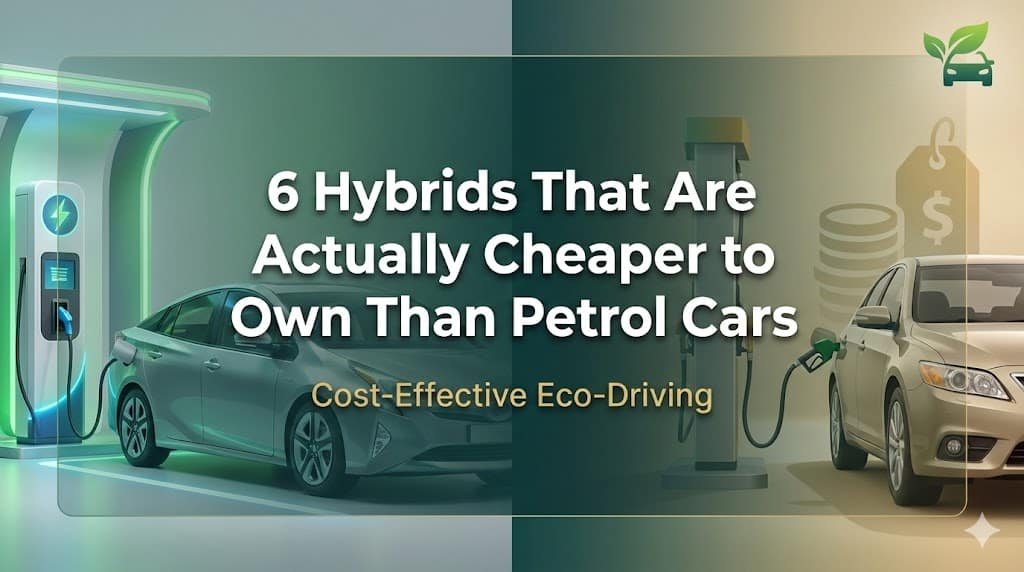
Rising fuel prices, changing import duties, and higher running costs have forced Pakistani car buyers to look beyond traditional petrol vehicles. In this environment, the idea that hybrids are always expensive to own no longer holds true. When total ownership cost is calculated properly—fuel, maintenance, resale, and reliability—several hybrids in Pakistan now undercut comparable petrol cars over time.
This article focuses on hybrids cheaper to own than petrol cars in Pakistan, with special relevance to Islamabad and Rawalpindi, where daily commuting, traffic congestion, and fuel consumption directly impact ownership cost. Instead of marketing claims, the comparison here is grounded in real-world usage patterns, fuel averages, maintenance behavior, and resale trends common in Pakistan.
Understanding Ownership Cost in Pakistan
Before comparing specific cars, it is important to clarify what “cheaper to own” actually means in the Pakistani context. Purchase price alone does not reflect real cost.
Ownership cost typically includes:
- Fuel consumption in city-heavy driving
- Routine maintenance and part replacement
- Reliability over long mileage
- Resale value after 3–5 years
- Downtime and workshop dependency
Hybrids perform particularly well in urban conditions like Islamabad, Rawalpindi, and Lahore, where stop-and-go traffic allows electric motors to reduce petrol usage significantly.
Why Hybrids Are Beating Petrol Cars on Cost
Modern hybrids do not rely solely on batteries. Instead, they combine efficient petrol engines with electric assistance, reducing fuel burn without adding charging dependency. In Pakistan, where charging infrastructure is still limited, this balance matters.
Key reasons hybrids are now cheaper to own:
- 25–45% lower fuel consumption in city driving
- Proven Toyota and Honda hybrid systems with low failure rates
- Strong resale demand due to fuel savings
- Lower engine stress leading to longer component life
With this context, the following six hybrids stand out as genuinely cost-effective compared to petrol alternatives.
Toyota Corolla Cross Hybrid
The Corolla Cross Hybrid has emerged as a strong option for families upgrading from sedans without stepping into high fuel consumption territory.
In daily use, the hybrid system dramatically reduces petrol usage in traffic-heavy routes such as Islamabad Expressway or Murree Road. Owners consistently report city averages far better than similarly sized petrol SUVs.
Compared to petrol crossovers, ownership savings come from:
- Noticeably lower fuel bills
- Toyota’s proven hybrid reliability
- Strong resale value in urban markets
For buyers who occasionally prefer renting a vehicle for longer intercity journeys, many Islamabad-based families pair a hybrid SUV with professional services like Al Farooq Rent a Car for extended travel, keeping long-term ownership costs lower while avoiding excessive mileage accumulation.
Toyota Aqua
The Toyota Aqua is often misunderstood as merely a small hatchback, but its ownership economics outperform many petrol sedans.
In real Pakistani city conditions, Aqua delivers fuel efficiency that petrol cars in the same price range simply cannot match. Maintenance remains straightforward because of Toyota’s widespread parts availability.
Why Aqua beats petrol rivals on cost:
- Exceptional fuel economy in city traffic
- Low routine maintenance expense
- High demand in the used market
For daily commuters in Rawalpindi and Islamabad, Aqua has proven to be one of the most financially sensible choices over a five-year ownership period.
Honda Vezel Hybrid
The Honda Vezel Hybrid strikes a balance between performance, comfort, and fuel efficiency. While petrol compact SUVs struggle to manage consumption in traffic, the Vezel hybrid system handles congestion far more efficiently.
Ownership advantages over petrol SUVs include:
- Lower fuel usage during peak traffic hours
- Honda’s reliable hybrid architecture
- Good resale value due to limited supply
For professionals commuting daily between sectors in Islamabad or working across Rawalpindi, the Vezel offers comfort without the fuel penalty typically associated with petrol SUVs.
Toyota Prius (Third and Fourth Generation)
Despite being on Pakistani roads for over a decade, the Prius continues to outperform petrol sedans in total ownership cost.
What keeps Prius competitive:
- Hybrid systems designed for long-term durability
- Lower engine wear due to electric assistance
- Consistent resale demand
While the purchase price may appear higher than some petrol sedans, long-term fuel savings and reliability tilt the balance strongly in Prius’ favor.
Toyota Yaris Cross Hybrid
The Yaris Cross Hybrid fills the gap between compact hatchbacks and full-size SUVs. It offers the benefits of a higher driving position while retaining low running costs.
In Pakistani conditions, it stands out because:
- City fuel efficiency remains excellent
- Maintenance aligns closely with other Toyota hybrids
- Compact size suits congested urban routes
Compared to petrol crossovers, ownership expenses remain controlled even with frequent daily use.
Suzuki Swift Hybrid (Mild Hybrid)
Although not a full hybrid, the Swift mild hybrid deserves mention due to its cost behavior in Pakistan.
Its mild hybrid system assists during acceleration and reduces fuel burn in urban driving. For buyers comparing it to conventional petrol hatchbacks, the difference becomes noticeable over time.
Cost advantages include:
- Slightly improved fuel efficiency
- Lower engine strain
- Affordable parts and servicing
For first-time buyers or small families, it offers a practical bridge between petrol and full hybrid ownership.
Fuel Savings Over Time
Fuel cost remains the most significant differentiator. With petrol prices fluctuating and often rising, hybrids protect owners from long-term fuel expense volatility.
In city-dominant usage:
- Hybrids typically save thousands of rupees monthly
- Savings compound significantly over multiple years
This makes them especially suitable for office commuters, ride-sharing users, and families with regular daily driving needs.
Maintenance Reality of Hybrids in Pakistan
Contrary to outdated perceptions, hybrid maintenance in Pakistan has matured. Experienced workshops now handle battery diagnostics, and replacement intervals are longer than commonly assumed.
Key points:
- Hybrid batteries often last 8–10 years
- Routine servicing remains similar to petrol cars
- Regenerative braking reduces brake wear
In major cities, hybrid ownership no longer involves the uncertainty it once did.
Resale Value Comparison
Resale value plays a major role in determining true ownership cost. Hybrids consistently outperform petrol counterparts in resale, particularly in fuel-conscious markets like Islamabad and Lahore.
Buyers actively seek hybrids due to:
- Proven fuel savings
- Confidence in Japanese hybrid systems
- Rising petrol costs
This demand cushions depreciation more effectively than in petrol-only vehicles.
FAQs
Are hybrids really cheaper to own than petrol cars in Pakistan?
Yes, when fuel, maintenance, and resale are considered together, many hybrids cost less over long-term ownership.
Do hybrid batteries need frequent replacement?
No. Most modern hybrid batteries last many years and often outlive initial ownership cycles.
Are hybrids suitable for daily commuting in Islamabad and Rawalpindi?
They are particularly well-suited due to traffic conditions that favor electric assistance.
Is maintenance more expensive for hybrids?
Routine maintenance is similar to petrol cars, and some costs are lower due to reduced engine and brake wear.
Do hybrids hold resale value better than petrol cars?
Yes. Strong demand driven by fuel savings keeps resale values comparatively higher.
Disclaimer
This article is intended for general informational purposes only. Ownership costs, fuel averages, prices, and resale values may vary based on driving habits, maintenance practices, market conditions, and time of purchase. Readers are advised to verify specifications, prices, and service details through authorized dealers or professional automotive sources before making any financial decision.