

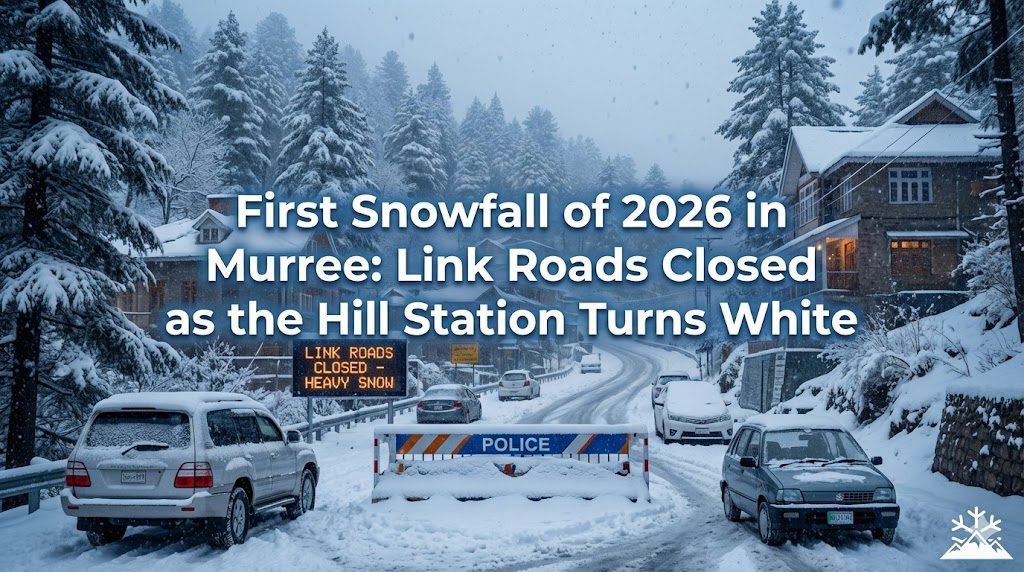
The first snowfall of 2026 in Murree has transformed Pakistan’s most visited hill station into a winter landscape, bringing joy for visitors and serious operational challenges for local authorities. As snow accumulated across Murree and surrounding hill areas, multiple link roads were temporarily closed, traffic movement was restricted, and emergency protocols were activated to manage safety risks.
This early-season snowfall is a reminder of how quickly weather conditions can shift in northern Punjab during winter and why preparation, accurate information, and responsible travel planning matter—especially for residents of Islamabad and Rawalpindi, where Murree remains the closest winter destination.
Snowfall Pattern and Weather Conditions in Murree
According to meteorological observations, snowfall began late at night and intensified during early morning hours. Upper Murree, including areas such as Kashmir Point, Pindi Point, and Galiyat-facing routes, experienced steady snowfall, while lower regions saw mixed rain and sleet.
Temperatures dropped close to freezing, creating icy road surfaces even where snow depth appeared manageable. Visibility fluctuated due to fog and snowfall intensity, increasing the risk of skidding and traffic congestion on steep inclines.
This pattern aligns with typical winter systems affecting Murree, where moisture-bearing western disturbances can quickly deposit snow across higher elevations while leaving lower regions deceptively clear.
Link Roads Closed After First Snowfall of 2026
Following the snowfall, authorities temporarily closed several link roads connecting Murree to nearby areas to prevent accidents and vehicle pile-ups. Roads leading toward Patriata (New Murree), Galiyat, and certain internal hill routes were restricted until clearance operations could be completed.
Road closures were implemented primarily due to:
- Accumulation of snow on steep slopes
- Formation of black ice on shaded road sections
- Limited traction for two-wheel-drive vehicles
- Traffic congestion caused by unprepared visitors
Officials emphasized that road closures were precautionary rather than reactive, aimed at preventing emergency situations rather than responding to accidents after they occur.
Traffic Management and Emergency Response
Traffic police, local administration, and district emergency teams were placed on high alert. Snow removal machinery was deployed on priority routes, while traffic wardens were stationed at key entry points to regulate inflow.
Authorities advised travelers to avoid non-essential travel during active snowfall periods and to follow official advisories rather than relying on social media speculation. Emergency helplines remained operational to assist stranded motorists and residents.
For updated weather warnings and travel advisories, official alerts are coordinated through the National Disaster Management Authority (NDMA), which provides verified forecasts and safety guidance during winter weather events.
Impact on Tourism and Local Movement
Murree’s economy is closely tied to tourism, and the first snowfall of 2026 has once again highlighted the delicate balance between seasonal excitement and safety concerns. While hotels reported a surge in inquiries and bookings, authorities restricted overnight tourist inflow during peak snowfall hours.
Local residents faced temporary mobility issues, particularly in neighborhoods located on elevated slopes. Essential services continued, but residents were advised to limit outdoor movement unless necessary.
Historically, unregulated tourist influx during snowfall has led to severe congestion and emergency situations in Murree. Learning from previous winters, authorities acted earlier this season to limit traffic and maintain control.
Travel Advisory for Islamabad and Rawalpindi Residents
For residents of Islamabad and Rawalpindi planning a trip to Murree during winter conditions, caution remains essential. Even when the main expressway appears clear, internal roads can become hazardous within minutes.
Key precautions include:
- Checking road status before departure
- Avoiding night travel during snowfall
- Keeping fuel levels above half
- Carrying warm clothing, food, and water
- Ensuring vehicles have proper tyre tread
Many families prefer delaying travel until snow-clearing operations are completed and road access is formally restored.
Vehicle Preparedness During Snowfall
Snow driving requires more than confidence; it demands preparation. Vehicles without adequate ground clearance, worn tyres, or functional heating systems are especially vulnerable on Murree’s roads.
Key vehicle checks before travel:
- Tyre condition and correct pressure
- Functional brakes and ABS systems
- Working headlights and fog lights
- Windshield wipers and washer fluid
- Battery health in cold conditions
Drivers unfamiliar with snow conditions are strongly advised to avoid driving themselves during active snowfall.
Role of Chauffeur-Driven Travel in Winter Conditions
During winter travel, especially toward Murree, many travelers opt for chauffeur-driven vehicles to reduce risk. Professional drivers familiar with hilly terrain, weather behavior, and local traffic protocols can make a significant difference during snow conditions.
For families traveling from Islamabad or Rawalpindi once road access reopens, services like Al Farooq Rent a Car are often used for city-to-city travel, providing trained drivers and well-maintained vehicles suited for winter conditions. This approach reduces stress and minimizes risk during unpredictable weather.
Economic and Safety Implications of Road Closures
Temporary road closures affect not only tourists but also supply chains, hotel staff, and essential service providers. However, authorities maintain that early closures reduce the likelihood of prolonged disruptions caused by accidents or stranded vehicles.
Past incidents have shown that delayed restrictions often result in emergency rescues, fuel shortages, and extended closures. The first snowfall of 2026 reflects a more preventive strategy focused on minimizing long-term disruption.
What to Expect Over the Coming Days
Weather models suggest intermittent snowfall spells may continue across Murree and nearby hill stations as winter systems pass through northern Pakistan. Temperatures are expected to remain low, especially during night and early morning hours.
Travelers should expect:
- Periodic road closures during active snowfall
- Delays even after roads reopen due to ice
- Increased police checkpoints
- Mandatory compliance with traffic advisories
Monitoring official announcements remains the safest approach before planning any travel.
FAQs
Is Murree open after the first snowfall of 2026?
Murree remains open for residents, but tourist entry is restricted during active snowfall and when link roads are closed for safety reasons.
Why are link roads closed during snowfall?
Link roads are closed to prevent accidents caused by snow accumulation, ice formation, and reduced vehicle traction on steep slopes.
Can I travel from Islamabad to Murree after snowfall?
Travel is possible only after official clearance. Even then, delays and restrictions may apply depending on weather and road conditions.
Are private cars safe for snow travel in Murree?
Only vehicles in good condition with suitable tyres and experienced drivers should attempt snow travel. Many visitors avoid self-driving during snowfall.
Where can I check official weather and road updates?
Verified advisories are issued through government channels such as the National Disaster Management Authority and local administration updates.
Disclaimer
The information provided in this blog is based on available reports, official advisories, and prevailing conditions at the time of writing. Weather patterns, road status, and administrative decisions can change rapidly. Readers are advised to verify current conditions through official government sources and local authorities before making travel decisions. The website and its owners are not responsible for any inconvenience, loss, or risk arising from reliance on this information.