
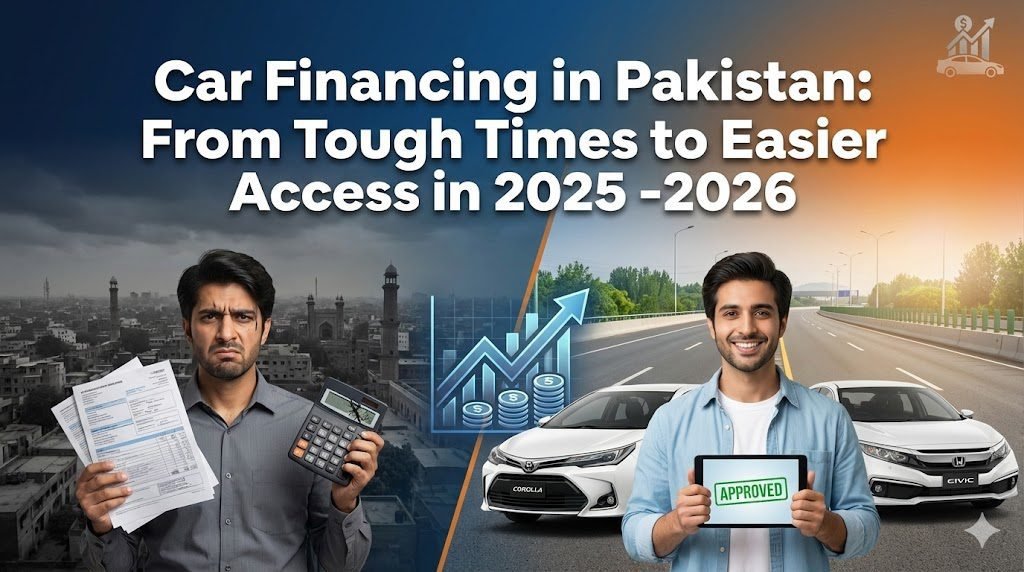
Car financing in Pakistan has gone through a difficult phase over the past few years. High interest rates, strict bank policies, currency volatility, and falling purchasing power made vehicle ownership challenging for a large section of the population. For many households, buying a car through financing became either unaffordable or completely out of reach.
As 2025 unfolds, the situation has begun to change. While challenges still exist, access to car financing has improved compared to previous years. Banks have cautiously adjusted their lending strategies, auto sales are stabilizing, and consumers are gradually returning to the market. This shift marks an important transition in Pakistan’s automotive and financial landscape.
This article explains how car financing in Pakistan moved from restrictive conditions to relatively easier access in 2025, what has changed, what risks remain, and what buyers should realistically expect.
The Difficult Phase: When Car Financing Became Out of Reach
The tough period for car financing began when Pakistan entered a phase of macroeconomic instability. Several factors combined to slow down auto financing sharply.
High policy interest rates pushed car financing markups to levels that made monthly installments unmanageable for most middle-income buyers. At the same time, banks tightened eligibility requirements. Down payments increased, loan tenures shortened, and approval ratios dropped.
Vehicle prices were also rising rapidly due to currency depreciation, import restrictions, and higher production costs. Even entry-level cars crossed affordability thresholds, making financing a less practical option.
As a result:
- Auto financing volumes declined significantly
- Banks reduced exposure to consumer auto loans
- Buyers delayed or canceled purchase plans
This period reshaped consumer behavior, with many people holding onto older vehicles longer or shifting toward used cars.
Early Signs of Recovery in Auto Financing
By late 2024 and moving into 2025, conditions began to stabilize. Inflation showed signs of easing, and policy signals indicated a shift toward economic normalization. While interest rates remained high by historical standards, the sharp upward cycle slowed.
Banks responded by cautiously reopening auto financing channels. Instead of aggressive lending, institutions focused on controlled growth with improved risk assessment. This approach allowed financing to resume without creating excessive pressure on the financial system.
At the same time, local car assemblers adjusted pricing strategies, and inventory availability improved. These changes collectively restored some confidence in the auto market.
What Changed in Car Financing in 2025
Car financing in Pakistan during 2025 is not identical to the pre-crisis era, but it is noticeably more accessible than before.
Key improvements include:
- Slightly more flexible loan approval criteria
- Better availability of financing for locally assembled vehicles
- Select promotions tied to specific models or brands
- Improved transparency in loan structures
Banks are prioritizing borrowers with stable income profiles and clean credit histories. While this limits access for some, it also reduces sudden policy reversals that previously disrupted financing markets.
Interest Rates and Their Role in Financing Decisions
Interest rates remain a defining factor in car financing. Although they have not returned to low levels, the stabilization has helped buyers plan more realistically.
In 2025:
- Monthly installments are still higher than pre-2022 levels
- Long-term financing carries noticeable markup costs
- Buyers are increasingly choosing shorter tenures to reduce interest burden
This environment encourages financially disciplined borrowing rather than speculative purchasing. Consumers are calculating total ownership costs more carefully, including insurance, maintenance, and fuel expenses.
Bank Strategies and Risk Management
Banks have revised their auto financing frameworks with a strong focus on risk control. Instead of blanket approvals, lending decisions are now more segmented.
Common trends include:
- Preference for salaried individuals with documented income
- Higher scrutiny for self-employed applicants
- Greater emphasis on vehicle resale value
- Lower financing ratios for imported or high-end vehicles
These measures reflect lessons learned from previous economic cycles, where rapid expansion in consumer credit created repayment stress.
Role of Hybrid and Fuel-Efficient Vehicles
Fuel efficiency has become a major consideration in financing decisions. With fuel prices remaining volatile, buyers are gravitating toward vehicles that offer lower running costs.
Hybrid cars, in particular, are receiving increased attention from both consumers and lenders. Banks view fuel-efficient vehicles as lower risk due to stronger resale demand and sustained market interest.
This trend is reshaping the financing mix, gradually shifting demand away from purely petrol-based models toward hybrid options.
Consumer Behavior: More Cautious, More Informed
One of the most noticeable changes in 2025 is buyer behavior. Consumers are no longer rushing into financing decisions.
Instead, buyers are:
- Comparing installment plans across multiple banks
- Evaluating total payable amounts rather than monthly figures alone
- Factoring resale value into purchase decisions
- Delaying purchases until financial stability improves
This cautious approach reflects the impact of the recent economic downturn, which reshaped household financial priorities.
Used Cars and Alternative Ownership Models
While new car financing has improved, used cars continue to play a significant role. Many buyers prefer financing a well-maintained used vehicle to reduce loan size and exposure to high markups.
In parallel, flexible mobility solutions have gained popularity, particularly in urban centers. For people who need reliable transportation without long-term financial commitment, professional car services offer a practical alternative.
For example, individuals who require predictable travel costs often rely on services such as Al Farooq Rent a Car for city use, airport transfers, or intercity travel, avoiding the financial risks associated with vehicle financing altogether.
Regulatory Oversight and Financial Stability
Car financing policies operate under broader regulatory supervision. Authorities closely monitor consumer lending to prevent overheating or excessive default risk.
The State Bank of Pakistan continues to issue guidelines on consumer financing, ensuring that banks maintain prudent lending standards while supporting economic activity. This balance is critical to sustaining the gradual recovery seen in 2025.
Challenges That Still Exist
Despite improvements, car financing in Pakistan is not without challenges.
Key issues include:
- High effective cost of borrowing
- Limited financing options for informal sector workers
- Price volatility in the auto market
- Uncertainty around future policy changes
Buyers must remain aware that financing conditions can shift if macroeconomic pressures return.
Practical Considerations for Buyers in 2025
Anyone considering car financing should focus on financial sustainability rather than short-term convenience.
Important considerations include:
- Monthly installment as a percentage of income
- Total payable amount over the loan tenure
- Insurance and registration costs
- Expected resale value
Responsible borrowing reduces stress and improves long-term financial stability.
FAQs
Is car financing easier in Pakistan in 2025?
Yes, access has improved compared to previous years, though conditions remain more controlled than in earlier periods.
Are interest rates still high for car loans?
Interest rates are still elevated, but the rapid increases have slowed, making planning more predictable.
Are hybrids easier to finance than petrol cars?
Many banks view hybrids more favorably due to fuel efficiency and stronger resale demand.
Should buyers consider used cars instead of new ones?
Used cars can reduce loan size and interest burden, making them a practical option for many buyers.
Is renting a car a better option than financing?
For short-term or flexible needs, renting can be more practical than committing to long-term financing.
Disclaimer
This blog is published for general informational purposes only. Car financing terms, interest rates, and eligibility criteria vary by bank and may change over time. Readers should consult financial institutions and official regulatory sources before making any financing or purchasing decisions.