

Quick Answer
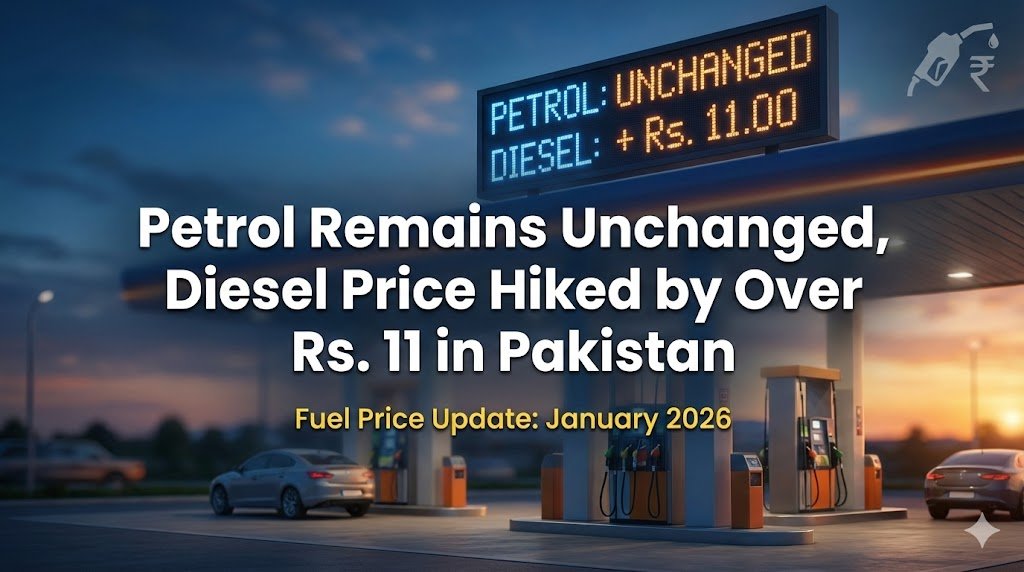
- Petrol price: Unchanged in the latest revision
- Diesel price: Increased by over PKR 11 per litre
- Effective date: Latest fortnightly price notification
- Main impact: Transport, logistics, agriculture, and inflation-linked goods
- Cities affected most: Islamabad, Rawalpindi, Lahore, Faisalabad, Karachi (nationwide effect)
- Reason: International diesel prices, exchange rate pressure, and tax adjustments
- Disclaimer: Fuel prices are revised fortnightly and may change based on global oil markets and government policy
Introduction
The announcement that petrol remains unchanged while diesel price is hiked by over Rs. 11 has triggered concern across Pakistan, especially among transporters, businesses, and households indirectly dependent on diesel-driven supply chains.
Unlike petrol, which is primarily used by private vehicles, diesel fuels commercial transport, agriculture machinery, generators, and public logistics. Any sharp increase in diesel prices has a ripple effect across the economy, influencing food prices, freight costs, and inflation.
This article explains what changed, why diesel was increased while petrol stayed the same, and what it practically means for Pakistani consumers and businesses.
Latest Fuel Prices Snapshot (Pakistan)
| Fuel Type | Previous Price (PKR/L) | Change | New Price (PKR/L) |
|---|---|---|---|
| Petrol | 253.17 | 0 | Same as previous |
| High-Speed Diesel (HSD) | 257.08 | +11 | Increased |
Exact notified prices vary by revision cycle and are confirmed through official government notifications.
Why Petrol Price Remained Unchanged
Petrol prices are influenced by:
- International petrol (MS) prices
- Exchange rate movement
- Petroleum Development Levy (PDL)
- Government price stabilization decisions
In the current revision, international petrol prices showed relative stability, allowing the government to keep petrol prices unchanged to avoid additional pressure on private consumers and urban commuters.
Why Diesel Price Was Increased by Over Rs. 11
Diesel pricing follows a different global trend:
Key Reasons Behind the Diesel Hike
- Rising global diesel prices
Diesel prices internationally have risen faster than petrol due to strong demand in shipping, power generation, and industrial use. - Exchange rate pressure
Even small fluctuations in the PKR–USD rate significantly affect imported diesel costs. - Revenue considerations
Diesel consumption contributes heavily to tax collection, making it a sensitive lever for fiscal adjustments. - Seasonal demand
Diesel demand rises during agricultural and transport-heavy periods, increasing cost pressure.
Economic Impact of Diesel Price Hike
Transport & Logistics
Diesel is the backbone of Pakistan’s freight movement. A hike of over PKR 11 per litre directly increases:
- Trucking costs
- Intercity bus fares
- Delivery charges for goods
These increases eventually pass on to consumers.
Food & Agriculture
Agriculture relies heavily on diesel-powered:
- Tractors
- Tube wells
- Harvesting machinery
Higher diesel prices mean increased production costs, which reflect in vegetable, grain, and commodity prices.
Inflationary Pressure
Diesel price hikes often:
- Raise wholesale prices
- Increase retail inflation
- Reduce purchasing power
Even consumers who do not own diesel vehicles feel the impact indirectly.
City-Level Reality Check
Islamabad & Rawalpindi
Higher diesel prices affect intercity goods transport, ride fares, and service costs.
Lahore & Faisalabad
Industrial and manufacturing sectors face increased logistics and generator expenses.
Karachi
Port operations, container transport, and intra-city logistics become more expensive.
Petrol vs Diesel: Why the Difference Matters
| Factor | Petrol | Diesel |
|---|---|---|
| Primary users | Private cars, bikes | Trucks, buses, agriculture |
| Inflation impact | Moderate | High |
| Govt sensitivity | Political | Economic |
| Price volatility | Lower | Higher |
This explains why diesel hikes are more economically disruptive even when petrol prices remain unchanged.
What This Means for Daily Commuters
Private car owners using petrol experience temporary relief due to unchanged prices. However:
- Ride fares may still rise due to diesel-based fleets
- Goods and food prices may increase
- Intercity travel costs may adjust upward
Practical Mobility Adjustments
Many households and businesses adapt by:
- Consolidating trips
- Using fuel-efficient vehicles
- Opting for shared or chauffeur-driven transport for longer routes
For intercity or business travel where cost predictability matters, users often rely on fixed-rate transport solutions such as rent a car with driver services. For example, commuters frequently compare options through the rent a car in Islamabad page to manage predictable travel expenses despite fuel volatility.
Decision Section
Who Is Most Affected
- Transporters and logistics operators
- Farmers and agricultural suppliers
- Small businesses relying on deliveries
Who Is Less Affected
- Urban petrol car owners (short term)
- Users with fixed transport contracts
Practical Alternatives
- Fuel-efficient petrol or hybrid vehicles
- Route planning to reduce consumption
- Fixed-cost transport agreements for businesses
FAQs
Why did diesel price increase but petrol stayed the same?
Diesel prices rose due to higher international rates and demand, while petrol prices remained stable during the same period.
How much diesel price increased in Pakistan?
High-speed diesel price increased by over PKR 11 per litre in the latest revision.
Will this diesel hike affect food prices?
Yes. Diesel-powered transport and agriculture costs usually pass into food and commodity prices.
Are fuel prices revised monthly?
Fuel prices in Pakistan are revised fortnightly, depending on global oil prices and government policy.
Can diesel prices come down in the next revision?
Prices may decrease if international diesel rates fall or if tax adjustments are revised.
Disclaimer
This content is published for general informational purposes only. Fuel prices, taxes, and government policies are subject to change without notice. Readers should verify current prices through official government notifications or authorized fuel suppliers before making financial or business decisions.